Author: mike@brandrevive.com

Questions to Ask to Evaluate and Manage Your Ideas

Too many ideas? Shiny ball syndrome? Ask yourself these questions to evaluate and manage your ideas and find the right actions to take to ensure success

Evaluate and Manage Your Ideas - Tina Dietz

I’m a creative person, as many of you are, and I have always dealt with the problem of having a large number of ideas all the time. I call it a problem because that’s what it was before I really learned how to start wrangling all my thoughts and turning them into productive ideas rather than getting caught in the “shiny ball syndrome” that takes us away from the things we need to be focusing on in order to produce the results that we keep saying we want.  

When we’re looking at any idea, we have to bring it outside of ourselves. Examine it like you’re examining a physical object. Look at all the parts: What do you like about it?  What about it has you absolutely enamored? What parts of it are causing you to hold onto it? What do you see about it that connects with the things that you’re thinking about doing or that you’re already doing? Will it slide in easily or take you in another direction? Is it a missing-piece-idea that fits in perfectly with what you have going on, or will it come into play later in the plan?

Asking the Right Questions

Ask yourself these questions to evaluate and manage your ideas and find the right actions to take to ensure productivity and a serene and calm approach to your projects:

  • Will it make a current part of your plan easier?
  • Will it make something better?
  • Will it make something faster?
  • Will it make something more profitable?
  • Will it make it more enjoyable?

If the answer to any—or all—of those questions is “yes,” put it into your plan. This is why I always recommend having a very flexible, creative, and strategic vision plan so that you can slide pieces in and incorporate them into what you’re already doing without throwing a big wrench into the plan.

If the answer to those questions were all “no,” but it’s a good idea, it might just be a good fit for later in the process. Slide it later into the plan, stop thinking about it right now, and use that as a holding center for your idea. It’s not going anywhere, and you can get to it at the appropriate time in the plan without distracting yourself now.

Putting Things into a GeoSync Folder

If the idea is one that you really don’t want to get rid of, but it doesn’t really fit into anything, you can put it into what I call a GeoSync folder. Think of yourself like a satellite, and you have ideas orbiting all around you. Turn this into a concrete idea, and create a GeoSync folder on your computer, Google Drive, or where ever you store your files. Keep track of your ideas, and review them every couple of months when you review your strategic vision plan. This way, they’re not taking up brain space or creating anxiety, but they’re also not disappearing into the ether that is lost thoughts and ideas.

Capture & Release…of Ideas?

It’s important to start an Idea Capture and Release Program. We all know that ideas don’t always come to us at the most convenient times. If we’re being honest with ourselves, we realize that our best ideas usually don’t come to us when we’re sitting behind a desk in an office, but rather when we’re using other parts of our brains and allowing our brains to be a little more free-thinking and creative. Where we get ideas is different for all of us, but the important part is to have a way to capture these ideas and not let them slip away.  

This is where habit-building comes in handy. Most of us having our phones with us nearly all the time. Use that to your advantage, and have a spot on your phone—either in your email or a note app—where you have a running list of ideas. Sync this with your GeoSync folder to bring your short-term thoughts of in-the-moment ideas that were captured, and combine them with your long-term stored ideas in GeoSync.

Bill Gates famously said, “I keep my plate full at 60%.” The first time I heard this, it really surprised me because of the amazing enterprises he built. He left 40% of his time for thinking and creative time, reading, or writing. Although these things seem like idle activities on the surface, they are actually the life-blood of creativity and allow your plans and actions to be more streamlined and better aligned with one another. We have a tendency to get really caught up in the hamster wheel of day-to-day life and all the busyness that comes with it, so we will have to be really intentional about scheduling this Think Time into our calendar. When we allow ourselves time to let our brains get into a different mode, we can get a whole new set of ideas that we never would have thought of before.  

Need support for your ideas and help bringing them into reality? Some great resources are:

  • Facebook Group: Online Creators Launchpad
  • Podcasts: Podcasters Hangout or She Podcasts (for us ladies with big ideas)
  • Book Groups: Check out the groups that I belong to on Facebook and also check out Florida Writers Association if you’re in Florida

Use Facebook for good, and get involved in the conversation and in-depth discussions on specific topics if you want to take all these big ideas and bring them into reality. Get out there, and StartSomething Creative! I go over all of this and more in this video, and if you watch it, you’ll even find out how I almost ended up being an emu farmer in Montana.

Want some help evaluating and managing your ideas?
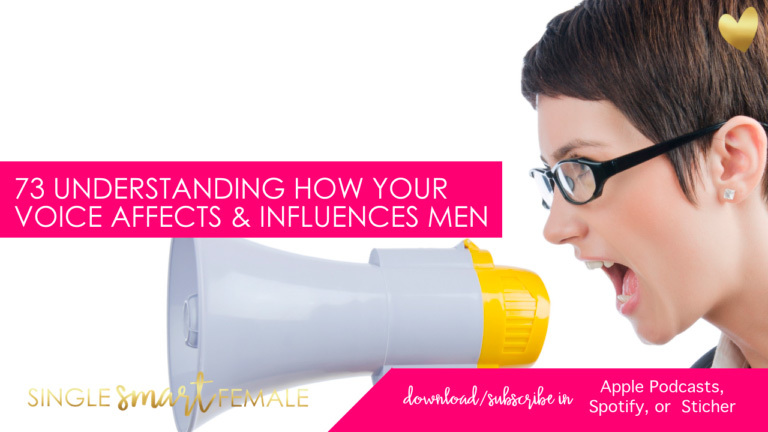
73 Understanding How Your Voice Affects & Influences Men – Dating Help With Single Smart Female [Podcast]

Your voice plays a bigger role in affecting/influencing men than you believe. It’s time you understand exactly how.(Podcast on Single Smart Female, October 18, 2018)

Find out how on this episode of Single Smart Female with special guest co-host Tina Dietz

How Your Voice Affects - Tina Dietz

Does He Hate My Voice Show Notes

Essential Learning Points from this Episode:

  • 00:52 – Today’s guest and today’s topic
  • 01:50 – This is our role in a man’s life, which is what makes us women even more special
  • 02:26 – There are some phrases that men have some conditioned response to. These are what we call “triggers”
  • 05:09 – This is what happens with men biochemically and otherwise when we say “We need to talk”
  • 05:35 – Women use similar vocal patterns in our conversations, which conditions our partner’s reaction
  • 12:43 – One of the phrases women use that can sometimes trigger men to react negatively
  • 14:50 – What do women mean with “I’m fine” exactly? How it affects men.
  • 16:14 – This is a good communication trick, so men don’t always misunderstand us ?
  • 19:12 – When you stop stuffing your feelings dow, this is what happens
  • 20:59 – This is how we can fight against being misinterpreted because of the tone of our voice
  • 22:04 – This is how you can communicate effectively and leave no room for misinterpretation
  • 23:12 – This is how you can clarify if you understood a message correctly
  • 27:22 – This is a psychological premise behind being true to your own communication tempo
  • 31:09 – This is what will happen if you try to deflect from what you really feel
  • 37:04 – This is something we can do to practice our vocal flow and improve our communication skills
  • 37:50 – Sonority is one of the things that affect our communication with men

Important Links and Mentions in this Episode:

Tired of meeting craptastic men?

Connect with Tina Dietz HERE

Want to surprise Jenn and show Single Smart Female your love? XO!!!

Episode 42 – Tina Dietz on Writing, Entrepreneurship and Audio [Podcast]

​In this week’s episode, Mark speaks with Tina Dietz who is an award-winning and internationally acclaimed speaker, audiobook publisher, podcast producer, and content marketing expert.(Podcast on Stark Reflections, October 12, 2018)

Entrepreneurship and Audio - Tina Dietz

Prior to the interview, Mark shares a few personal updates that include the launch of his new traditionally published book Macabre Montreal, and how that book launch interfered with attending the NIGHT OF THE WRITING DEAD event in Pittsburgh that same weekend.

This episode is sponsored by Findaway Voices . . .

. . . and also by the Patrons of the show at www.patreon.com/starkreflections.

All patrons will find, this week, the full audio of the first chapter about PRACTICE from Mark’s forthcoming audiobook of The 7 P’s of Publishing Success.

In their conversion, Mark and Tina talk about

  • The link between writing/expression and entrepreneurship
  • How writing (particularly in print) can be an enduring format as a tangible legacy
  • Tina’s introduction into podcasting and audiobook production
  • Tina’s Forbes article “Do You Sound Like a Leader?” that focuses on the relationship between vocal qualities and how a person is viewed as a leader
  • Getting used to and comfortable with the sound of one’s own voice
  • Breathing techniques and facial exercises used for voice or singing voice
  • Food and drink to avoid when doing voice work (dairy and citrus, for example)
  • The coaching Tina does helping authors getting ready to do interviews for radio or podcasting
  • The difference between forms of media like television, radio and podcasting
  • Trends in the audiobook industry that authors might not be familiar with
  • The concept that anything you create needs to be an asset and not a burdenThe free download that Tina has on her website that helps demystifies the audiobook process – www.launchyouraudiobook.com
  • Things to consider when deciding between narrating and producting an audiobook yourself or outsourcing that
  • How Tina’s clients often “come for the audiobooks and then stay for everything else”
  • The pre-interview Tina sent to Mark ahead of the podcast which made things so much easier for Mark

In the post-interview reflections, Mark talks about how Tina’s info PDF made his job as an interviewer so much easier and he also shares a link to a WORD document template that authors can download and modify so they have something similar to use for their own podcast or radio interviews.

Links of Interest:

Tina Dietz Twin Flames Studios Audiobook Publisher leadership podcasting

Tina Dietz is an award-winning and internationally acclaimed speaker, audiobook publisher, podcast producer, and content marketing expert who has been featured on media outlets including ABC, Inc.com, Huffington Post, and Forbes. Tina’s podcast, The StartSomething Show, was named by INC magazine as one of the top 35 podcasts for entrepreneurs. Tina’s company, StartSomething Creative Business Solutions, connects leaders, entrepreneurs and experts with larger audiences, resulting in expanded influence and income. Tina divides her time between the US and Costa Rica, where she’s part of a leadership team building a conscious community called Vista Mundo.

The music for this podcast (“Laser Groove”) was composed and produced by Kevin MacLeod of www.incompetech.com and is Licensed under Creative Commons: By Attribution 3.0

Interested in learning more about audiobooks and howyou can be using audio in your writing career ?

Creating Safety for Ourselves and Being a Vulnerable Leader

Have you ever wondered what safety has to do with leadership, especially with a vulnerable leader, or being a working professional? The answer is: A lot!

Being a Vulnerable Leader - Tina Dietz

Safety is a concept we learn early on during the most formative years of our childhood. We look to make ourselves feel safe on a daily basis. It is, after all, one of the most basic needs on Maslow’s Hierarchy of Needs, and until the need to feel safe has been met, we cannot begin working upward toward the other needs on the list. This leaves us feeling insecure, unfulfilled, and frankly, unhappy.

You’re probably wondering what safety has to do with leadership or being a working professional. The answer is: A lot.

There’s been more and more press recently about being a vulnerable leader, opening ourselves up to connection and authenticity, and how all these things can make us stronger leaders, managers, supervisors, or even just colleagues. And what does it all mean? How can these things make us stronger networkers or speakers?

As professionals, we tend to go through a little bit of a push and pull between wanting to appear professional and be powerful in the moment and still managing to speak to our audience and connect with them. It’s a little bit of a dichotomy, and experiencing this contradiction can make it very difficult to really feel comfortable being vulnerable.

For those of you who don’t know my backstory, I  have a background as a therapist, business coach, and voice actor. From my earliest time as a child, I remember creating a lot of safety for myself by anthropomorphizing the entire world around me (and I still do it today). This has brought me to collect and own a large collection of friends and creatures who have brought me great comfort throughout the years and have their own wisdom that can really only be accessed when you speak in their voice.

Have I lost you yet? No? Good. I’m talking about a large group of puppets, the first of which I discovered at a puppet petting zoo that had been set up when I was in graduate school to become a therapist. It was meant for therapists to shop around to use puppets as therapy tools, but what we found there was much deeper. I noticed George, the black-footed ferret, and I started thinking about how much of a crisis of conscience he was probably having being that he is a carnivore, but he’s also cute and fuzzy. I felt a connection with him right away, and I looked around and noticed that my connection to George was causing others to come over and check out the other carnivores like the wolves. People saw my connection with George, and they wanted to feel that connection too. Spontaneously, several other therapists and I started a carnivore support group. And no, I can’t make this stuff up!

You might never be in a situation where you’ll be connecting with a puppet at a puppet petting zoo, but this lesson translates into human connection as well. When people really connect with one another and allow themselves to be vulnerable, they find a common space of humanity. This common space acts as a mirror to other people, making them more comfortable and willing to come forward with their own feelings.

Many of us as children don’t successfully go through the stage in our childhood that Erik Erikson determined as the time when we decide if the world is a safe place or not. This causes them to not trust the world and to feel like it isn’t there for us. I was one of these people, and there are many, many more like us in the world as well. It’s important to look back through our childhood and find those things that made us feel safe as kids. This can trigger a neurological, emotional, and even a physiological response that can help us move past that unsafe space and step into our adult being so we can then take care of the younger parts of ourselves.

Sometimes to cope with our sense of ‘un-safe-ness’ we over-rely on things like food, sexual contact, or other things that may or may not serve us. We even have a tendency to search for connection on social media, but this often leads to us finding things that are very overstimulating and provoking. It does us no favors, especially for those of us who feel emotions very intensely.

As humans, we have a tendency to want to make decisions right away. We want to push forward, do things, change the environment…but if we do this on top of feeling unsafe or insecure, we might be doing things that actually snowball the negative feelings and lack of safety and make it worse.

Listen to yourself, and you’ll be more able to listen to others. Connect with people, look into their eyes, and when you get nervous or feel afraid, take care of the younger part of yourself that doesn’t feel safe. You can have the grown-up part of you take care of the little parts of you. It’s okay, and it’s necessary.

And, if you need help, just ask.

Take the next step in Your Leadership

Why You Need to be Publishing Audiobooks – with Tina Dietz [Podcast]

​The popularity of devices like Alexa have created a rise in the demand for audio to educate and entertain commuters and laundry-folders alike. James talks to Tina Dietz about creating audiobooks from both our fiction and non-fiction work.(Podcast on Self Publishing Formula, September 14, 2018)

Publishing Audiobooks - Tina Dietz & Mark Dawson Self Publishing Formula

This week’s highlights include:

  • The importance of creativity in every type of business
  • How creativity makes us more productive
  • The different approaches to audiobooks by fiction and non-fiction authors
  • Thoughts on narrating your book yourself
  • The range of costs for producing an audiobook, including what you can expect to pay a narrator
  • Auditioning narrators to find the right voice for your book
  • Providing character information to narrators to find a good fit
  • Reading your book out loud yourself to get a sense of your characters’ voices
  • The three reasons for starting a podcast

Resources mentioned in this episode:

PATREON: Self Publishing Formula Podcast’s Patreon page

TINA’S WEBSITE: Twin Flames Studios 

Wondering how you can leverage your books and work?

SPA Girls Podcast – EP152 – Interview with Tina Dietz About Audiobooks [Podcast]

​This week we have the fabulous Tina Dietz, an expert in the area of audio, podcasting and audiobooks, who talks to us about the ways we can be using audio in our writing careers.(Podcast on Self Publishing Authors Podcast, September 12, 2018)

About Audiobooks - Tina Dietz & SPA Girls Podcast

She gives us the low down on audiobooks, how to get them recorded, how they fit into the marketing of your other book formats, and how to promote/market them to your audience.

She also talks about the expanding audiobook industry and why we should all be considering adding audiobooks to our inventory of books.

Tina gave us some amazing ideas for how to promote audiobooks, or even just using audio to promote your print or ebook versions of your book. She’s a very smart marketer, with a strong grasp of the audio market, and this is a must-listen episode for anyone who’s thinking of getting into audiobooks, or who already has audiobooks on sale. (Or in fact anyone who thinks they could use audio in any way to help with the marketing of their books. ???? )

About Tina

Tina Dietz MS, NCC is an award-winning and internationally acclaimed speaker, audiobook publisher, podcast producer, and content marketing expert who has been featured on media outlets including ABC, Inc.com, Huffington Post and Forbes. Tina’s podcast, The StartSomething Show, was named by INC magazine as one of the top 35 podcasts for entrepreneurs.

Tina has been building businesses for over 20 years and is the owner of StartSomething Creative Business Solutions, a company committed to connecting experts, authors, and entrepreneurs with their ideal audiences through audio branding and marketing with a deep specialty in audiobook publishing, podcasting, and thought leadership.

Website

Interested in learning more about audiobooks and howyou can be using audio inyour writing career ?

How to Use Audio to Get Your Kids to Learn

Why using audio to get your kids to learn is an easy and convenient way to give them opportunities to become even more well-rounded and well-educated.

Audio Marketing Get Your Kids to Learn - Tina Dietz - audiobook expert

In a world full of distractions like YouTube, thousands of different video games, social media, toys, sports, etc., it’s not always easy to get our kids to learn, much less develop and cultivate their interests and skills. But school is enough, right? Wrong. Everyone learns differently-some visually, some are more hands-on learners, and some learn best through audio, which provides a large variety of ways for kids to learn.

With the rise in popularity of podcasts and audiobooks, more and more ways to help kids get get excited about learning and discover new interests are popping up every day. Using audio to help kids learn is an easy and convenient way to give our kids opportunities to become even more well-rounded and well-educated, hopefully resulting in a young person who grows up to love learning.

Here are some ways you can use audio to get your kids to learn so that you can get started right away. They’ll thank you for it!

Using audiobooks to get kids to learn is different from reading with them and is also very different from just sitting them in front of the TV and allowing them to watch shows (even if they are educational). Listening to audiobooks forces children to use different skills than reading and allows for much more imagination than the TV. Children who find reading difficult can also find great relief in being able to listen to a book. Audiobooks are great for car rides, time when children are self-entertaining while you’re cooking dinner, or even for you to listen to together and discuss after. Some ideas of ways to use audiobooks for children’s learning are:

  • Find fun stories for themThere are tons of audiobooks for children of fun, engaging stories with colorful language for them to use their imaginations, learn words, get excited about listening to the stories, and want to talk about them after.  These can be great conversation starters, so make sure to engage with your child about what you listen to together!
  • Provide sketchbooks and crayons or pencilsThis helps them to further utilize their imagination. While they’re listening, they can draw what they think their favorite characters might look like, strengthening their creativity and encouraging them to use a part of their brain that looking at pictures in books doesn’t activate.
  • In the case of children who find reading difficult, audiobooks can be a tremendous reliefKids can keep up with their schoolwork easier and also become more confident in their reading abilities by listening to an audiobook at the same time that they’re following along with a print or digital version of the book. By engaging more than one of their learning senses at the same time, the brain can integrate the information with more ease.
  • Be close by to answer any questionsIn order for an audiobook to really be engaging and educational, you’ll want to make sure you can define unknown words for them, answer questions about the story as it unfolds, or even just listen to their excitement as they tell you all about what they’re listening to.

More than half of people in the US listen to podcasts weekly, and yes, they can be used for children as well. Many people think that podcasts are always about business or politics, but there are a ton of different podcasts that exist, and many of them are for children! Some teachers utilize podcasts in their classrooms, and you can use them at home to get your kids to learn, too. There are book club podcasts for kids, science ones, fictional stories, and so much more. Podcasts can be utilized similarly to audiobooks to help kids learn, but they can also be used in the following ways:

  • Podcasts offer the advantage of being shorter, and once your child finds one they particularly like, there are usually a whole slew of episodes from that one podcaster from which they can choose.
  • You can have them create their own podcasts! – Free podcast recording software might not be good enough quality to publish, but it IS good enough to encourage your kids to research topics they like or write their own story. Help them record it, have fun with it, and listen to it as a family (or with friends) later. They’ll have something they’re proud of, and it will encourage them to delve further into their interests and passions. It also encourages a use of words that children usually aren’t otherwise engaging.
  • Podcasts are free and easy to download. Put them on your phone, tablet, or even on your computer.

Long story short, there are SO many options when it comes to using audio to help children to learn, and create the beautiful “side effect” of giving you and your kids great conversation topics to explore together. While we still greatly encourage and recommend that you read with your kids and have them read any and all types of books, podcasts and audiobooks are a great addition to any child’s learning and language skills. They’re also an excellent resource for children with learning challenges. Audio teaches all kids to listen for things to talk about later, to develop their imaginations, and develop the ability to ask engaging questions.

Do you have a favorite audiobook or podcast that would be great for kids or families?Please share in the comments, and have fun learning!

Have thought of publishing your audiobook?

How To Stop Feeling Overwhelmed When Change Is Afoot

Feeling overwhelmed? Important elements of self-care, including sleep, nutrition, meditation, exercise, and hydration, are always important. In this blog, I offer some CompassionateTogether™ strategies that reduce overpowering thoughts and emotions.

Stop Feeling Overwhelmed - Tina Dietz - StartSomething Creative Business Solutions

5 Strategies to Practice

1. Trust yourself

Trusting yourself is a practice. Not trusting yourself is bound to bring anxiety and fear, common feelings contributing to being overwhelmed. Trusting yourself because your gut holds your Divine small still voice that is there to guide you.

Lean into your gut and say, “No wonder.” Lean into yourself and say, “I see you. I see me. I accept where I am at this moment and I know all things change.”

2. Breathe out

Holding one’s breath is a normal reaction to stress, change, fear, and anxiety. Breathe out! Try it now.

Breathing out very slowly through pursed lips will send a signal to your brain that you are safe and there is no crisis.

During periods of overwhelm, make a point multiple times a day to breathe out slowly with intention.

3. Empty your cup

Emptying your cup is sharing, and this strategy is particularly important during times of change. Share what is overwhelming you: write it down or share with someone.

Finding someone with whom you can share can be a challenge if you do not have a therapist, coach, or spiritual mentor.

One option is to ask a trusted friend or family member to listen for 15 minutes without interruption: set a timer on your phone. After the 15 minutes, switch and do the same for your trusted other.

Another idea is to do what I call “speaking it” meditation: again, set an alarm and for no more than 15 minutes, talk out loud: speak what is going on inside and notice without judgment.

4. No such thing as failure

All of life is practice. When things do not go as planned, breathe and consider what happened as feedback.

Practice trusting that everything is working in your favor.

Stay on your own side with humility, i.e., stay teachable and open without shaming and blaming, and take responsibility for any mistakes.

Breathe out, knowing that when you make a decision, you can always make another one.

Humans are free to choose.

5. Toes up!

Whenever you are in a period of great change or creativity, the challenge is to relax and put your toes up when everything inside says, “Fight!”

Go with the flow. Trust your gut.

Trust your connection to your spiritual core, whatever that may be for you.

All is well, and all shall be well, somehow, some way.

To go with the flow, resist trying to control the tide of change.

When you notice any signs of fear or control, ask yourself if there is any action, however small, that will reduce the anxiety of the moment. If so, do that one thing. If there is no action to take, practice acceptance. Acceptance is often a gift of grace. Meditation can be helpful while we wait for the gift to arrive.

So there you have 5 complementary strategies to practice:

  1. Trust yourself
  2. Breathe out
  3. Empty your cup
  4. No such thing as failure
  5. Toes up!

How do you help your loved ones with this tide of change?

Remember these 5 tips:

  1. What others say is about them
  2. What others feel is about them
  3. What others think is about them
  4. What others do is about them
  5. Be compassionate and love them

Your loved ones’ reactions to what is happening are not about you: their reactions are theirs and are about them.

Practice witnessing the people in your life: what they are saying and doing is information about your loved ones.

Your reactions to what others are saying and doing are about you.

Keep swimming and toes up!

Love and blessings,Sherri

Stop Feeling Overwhelmed - Sherri Williams Tina Dietz

Sherri Williams has been a therapist and coach in private practice in Pittsburgh, PA for the last 14 years, helping hundreds of people make more loving choices for themselves. She has an MSEd in Marriage & Family Therapy, is a Board-Certified Counselor and Coach, and is a Licensed Professional Counselor in Pennsylvania. Prior to being a therapist, she worked as a CPA for Ernst & Young, taught at the University of Pittsburgh, and was an executive in nonprofit administration. She is the CEO of CompassionateTogether LLC, an organization dedicated to helping people be compassionate with themselves and one another by offering online groups, workshops, and certifications for coaches and businesses. Her book, Turtles & Bears: How Couples Can Be Compassionate Together is expected for publication in 2019. To receive monthly strategies for compassion, subscribe to her CompassionateTogether™ LetterHere are the ways to connect and follow her on social media: FacebookLinkedInInstagramPinterestTwitter.

Sherri Williams MEd LPC BCC – CEO of CompassionateTogether LLC & Owner of TheLovingChoice.com

Ready to Stop Feeling Overwhelmed and create your oasis?

How to Make More Money With Your Audiobook – The Audible Bounty Program

When you turn your book into an audiobook, you do so in the hopes that it will bring in more income. Have you heard about the audible bounty program?

audible bounty program - Tina Dietz - Audiobook Expert

When you set off to turn your book into an audiobook, you do so in the hopes that it will bring in more income from the book you spent so much time and energy writing and publishing. Many authors assume that the only way to make money from publishing an audiobook is through sales, but there’s also another, lesser known way to make money with your audiobook.

ACX is a marketplace for professional narrators, agents, publishers, and rights holders to create audiobooks and distribute them to Audible, Amazon, and iTunes. Just recently, they have announced a new version of their Bounty Referral Program, which will increase payout to its members and provides many member benefits.

What is the Bounty Referral Program, you might ask? It allows those who are selling audiobooks another option for making money off all their hard work. Through the Bounty Referral Program, members can earn up to $75 each time a new Audible listener becomes a member using your referral link, plus any royalties earned from the sale of the audiobook itself.

When an audiobook has been produced on ACX, the rights holder will receive trackable referral links that is unique to each of the audiobooks published. For those who entered into a Royalty Share agreement with a narrator, (as opposed to paying the narrator up front for their services) $50 will go to the creator of the audiobook, and $25 will go to the narrator for each bounty.

When marketing your audiobook, you’ll want to make sure you use your unique ACX tracking URL to bring any listeners straight to the book without any delay. If that user isn’t currently registered on Audible, that $75 bounty will be added right to the audiobook creator’s account. This means it’s important to share with your email list, social media followers, and friends and family. As an audiobook creator, you’ll want to make sure you let everyone know how very magical it can be to listen to a book rather than read it when listening to a story.

Particularly when listening to non-fiction, it can be helpful for listeners to do something at the same time as listening, such as taking notes or even multi-tasking (we all know people who prefer it!). When including your book URL in marketing efforts, you can also include clips of your audio, your retail sample, a book trailer, or a good, old-fashioned book synopsis. Even those who have read your book may be interested in listening to the book to hear it differently.

The ACX Bounty Referral Program not only gives you a chance to bring even more listeners to Audible to listen to each audiobook you publish, but it also will bring you additional income with each new Audible member who comes in with your unique link.

Considering publishing an audiobook on ACX? The Bounty Referral Program might encourage you further. Need help? Our team at StartSomething Creative Business Solutions can take care of the whole production and publishing process for you or help you along the way!

Need help producing and publishing your audiobook?

Become a Great Podcast Guest with Tina Dietz [Podcast]

​When Tina Dietz was handed a tape recorded at 2 years old, that was that, she developed a life long love affair with speaking.(Podcast on Inner Dominatrix, August 15, 2018)

Great Podcast Guest - Tina Dietz

When Tina Dietz was handed a tape recorded at 2 years old, that was that, she developed a life long love affair with speaking. Today she is a speaker, audio-book publisher, podcast producer, and an internationally acclaimed business coach who has been featured on ABC, Inc.com, Forbes and Huffington Post. Her company, Start Something Creative Business Solutions works with authors, experts and entrepreneurs who want more than just a business and more than a routine life. They want a business oasis.

Summary

Tina discusses being a podcast guest, and the difference between being an average guest, and a good guest. She also talks about showing up to have a real conversation, instead of just to promote something.

She shares the single easiest way to get onto a podcast, and how simple it really is. She also stresses the importance of making sure the shows you appear on are the right fit for you.

Dana and Tina talk about evergreen content, and how it’s very beneficial when it comes to sharing and promoting podcast episodes. They also discuss strategic hiring and how it can help immensely, even early on.

Tina gets into the key pieces and takeaways for someone who is looking into being a podcast guest. She gives practical tips, as well as insights to keep in mind as you move into being a guest.

Quotes

  • “There’s being a guest, and then there’s being a good guest.”
  • “People come for the topic, but they stay for the host.”
  • “It’s not all about you, it’s about you getting involved with that hosts’ community.”
  • “Every interview you do is a marketing asset.”
  • “Show up prepared.”
  • “Having a podcast means that you have a platform to share influence with other people.”

Links

https://twinflamesstudios.com/

Want to learn more aboutpodcasting for your business?

Pin It on Pinterest