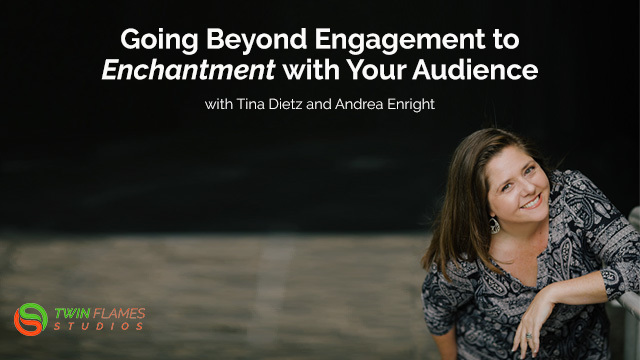
How to Enchant Your Skeptical Audience and Bring Them Back for MORE

Tina Dietz talks to Andrea Enright about the importance of not just engaging, but enchanting, your audience.(Facebook Live, August 11, 2020)
How to enchant your skeptical audience - Tina Dietz

Tina Dietz talks to Andrea Enright about the importance of not just engaging, but enchanting, your audience. They discuss:

  • How “engagement” has become a social media buzzword
  • How it’s vital to make people understand what you provide, not just what you do
  • The importance of being authentic
  • Tips for improving your profile and presence on LinkedIn
  • The value of stories for creating enchantment—but avoiding the “Once upon a time” trope!

Listen below:

Hey everybody!

Since I’m posting this publicly, I’ll introduce myself really quickly. And then of course, my beautiful friend and colleague here.

So those of you don’t know me, I’m Tina Dietz, I’m the owner and CEO of Twin Flames Studios. I have been building businesses for many decades internationally, but what me and my company do best is unleash the voices of trusted brands and companies, executives, and leaders worldwide. We do that primarily through audiobooks, podcasting, and vocal leadership.

I’ve decided to go ahead and talk with some of my colleagues live—we have all these conversations that happen in the background, I know all these amazing human beings who are out doing incredible work in the world and I thought, “Well, you know what, why not share some of this awesome with the world?”

This is Andrea Enright from The Boot Factor—and I’ll tell you more about her in just a second—but Andrea and I had gotten to talking about the proliferation, the outrageous number of people claiming to be LinkedIn experts that is happening lately. And all the mistakes that people make in their branding and their messaging, and how tired we are of certain conversations in the industries that we work in with consulting and coaching and service industry professionals.

We work a lot with the financial industries, and with high end consultants, with healthcare organizations—pharmaceutical—and training organizations. So you know, we have all these inside conversations; now we’re bringing it back out to you and today what we’re talking about primarily is the conversation around engagement: “Well you have to create an engagement on social media!”

Are you tired of that? I’m tired of this.

Buzzword, buzzword, buzzword!

It’s such a buzzword right?

Let me tell you more about Andrea before we get into this. So Andrea, has been an entrepreneur since 2002. And much like myself, she has a checkered past…

Well, they’s fun questions to come. That’s what we call a hook!

Love it!

But she’s been working, beautifully, with coaches, with consultants, a lot of folks coming out of the corporate world becoming consultants, and helping them to clarify their message—”Please god, clarify your message”—and get your message out there, in these badass elevator pitches, making sure that your LinkedIn profile is, I’m gonna use a really horrible term, “on fleek.” 

But making sure that it is beautiful and pristine and represents exactly who you are. We’ll talk a little bit more about how that gets done. Because that is an art and a science. And she’s just a really cool person to hang out with. I love her because she’s no BS. That’s what we’re mostly talking about here.

So, thank you for joining me here today. We were having some technical issues with Facebook Live, so thanks for hanging with me through that.

Thanks, Tina!

Yeah. Sorry, do you want me to—should I talk about—

No! Talk. Absolutely! Go ahead. I’d love to have you go and dive in. I’m curious, what did I miss?

I mean… I really work with coaches and executives, and really helping people get brave with their brand, basically. When you get brave, then you get to something called, what I’m starting to call, “Leads In,” which is getting Lead Gen without freaking out, you know?

Yes!

Without the panic! So, if you can get to your authentic self, and you can get brave, and you can show up and get vulnerable and show just a little bit of lack of perfection because nobody wants to see that—we’re totally bored with it. We’re not interested in a long list of achievements.

And I think… Here, how about this? This is really what it sums up—most LinkedIn profiles start out with, like, “I’m not sure how to tell you this, but I’m kind of a big deal.” Right?

Yeah, actually, mine does. I know mine’s up for an evaluation. That’s one of the reasons you and I have been talking And I haven’t updated it yet. Because I’m intending to have your badassery all over it! So, that was the way it got done.

And it’s the same way with webinars and things like that, you know? Speaking from my own experience: I’ve had to talk to a number of clients in the vocal leadership side of things to please, please, please tell a human story. Don’t spend twenty minutes talking about your long list of how perfect your life is before you actually teach anything or share anything or give people any value about why they’re there.

Right! To give people credit—to not totally throw everyone under the bus—LinkedIn was set up originally as like this resume place, right? Like this job seeking place. So people are like, “Oh my gosh, I better put everything that’s amazing about me in a long boring list, like a play-by-play timeline of your life.” And guess what? Nobody cares!

Yep.

Just please summarize for me, because I’m not getting past the third line.

Yeah, and that’s it. Our attention spans are like that of a gnat, pretty much, online these days. And, well, here’s what here’s one of my other favorites: I’m sorry, guys. We’re not trying to totally throw you on the bus here. If you have any of these things, it’s okay. We’re all human. It’s a good time. But you know, how about how about this? This pose!

It’s true! I think people get really self conscious about “How am I supposed to look?” It can be okay. If you’re looking authentic, if your teeth are showing, if you’re smiling, if your face is taking 60% of the frame.

Yes—please.

Then you’re good. I don’t care what you’re doing. But yeah, there is a pose—a perfection about it. And people are just not interested in that. And now LinkedIn is going from like resume to resource, like, “How can you be of value?”

Yes! From resume to resource! Let’s talk about that. We’ve been doing some different things on LinkedIn this year and really doubling down on using LinkedIn.

We’ve been using LinkedIn a lot in the background and now it’s kind of having a resurgence. I think for a long time, LinkedIn was a bit of the redheaded stepchild of the social media world, and now it’s having a resurgence because so many more companies—we’re business to business companies, and us marketing high-end services on Facebook does not work. Same with Twitter. Forget it.

Yes!

It’s noise. It’s just noise. So we’ve been having a lot of a tremendous engagement—hopefully enchantment, we shall see—with folks. And getting tremendous reach on our post, sometimes up to 65, 70,000 people seeing our posts! But it takes a lot of time to craft these messages, and get things out there. Fortunately, I have a fabulous team and they’re really helping to repurpose content, get things out there every day on a regular basis.

But you know, where do you think people should start? Do you start with the content? Do you start with your profile? Chicken/egg.

I want to talk about the posting because I think there’s a big shift that needs to happen with the posting. But the profile is really where you start. That’s where you should start with anything. If you are a high-end coach, executive turn consultant, speaker, author—people are googling you, they’re finding you, please start with your profile, and turn that into a resource instead of a resume.

So, how can you give a soft sell and create Thought Leadership, and give them something that they can use in their meeting today at 3 o’clock—and this is amazing! This makes them think, “Oh, wow! She knows what she’s talking about,” and “Oh, wow! I’m going to call her anyway.” They’re not going to go implement your shit with this “three tips” that you give them. If they’re serious, they’re gonna call you. So this is really just—it’s giving. It’s giving stuff away and being okay with that. It’s serving instead of selling.

Serving instead of selling. That really is the key, and I think that it’s also important if that feels like a foreign concept for people. Because every so often, most of the people that we work with are heavily service-oriented, heavily relationship-oriented. They’re used to doing a lot of business what we would call “belly-to-belly.” But I think a lot of folks have a difficulty translating that to online, particularly our podcasting clients.

We work with a lot of folks who are very high touch, very white glove, wealth managers and consultants, who really spend a lot of time cultivating relationships with their clients. So when you go into a social media situation, it feels sometimes to them—not only like the Wild West, but like a foreign entity, like a different language they have to speak.

We talk about being vulnerable. We talk about being authentic. But for somebody who’s having these long conversations with people, how does that translate?

This has been a perfect segway because of Zoom, because of having to switch to Zoom. So, people are like “I meet my clients face to face, I can’t give them this custom thing. How do I do this?” And really, I think it used to be building a LinkedIn profile to get people to know, like, and trust you—

Yes, classic.

—and that was, like Dale Carnegie. It’s like, Okay, “How can I get get those people in,” right? But now it has to be these three things, I believe, these three pillars. Mine are: Translate, Educate, and Enchant.

So, we Translate that message; and the biggest way we do that is, because we’re not face to face with them and we can’t see, we can’t go off their cues—we are not in real time—we have to Translate that message, and we have to think, “How can I think of it in terms of how they’re thinking about it.” Not “how I’m thinking about selling it,” because nobody wants to be sold to. “How can I think about it in terms of them receiving it?

What is their pain? What’s keeping them up at night? What is the wound that they have that they can that they cannot get past? What is hurting? And what will then make them think of that message in a translated way. So, Translate is really that first one. 

Yeah, Translate very, very important there.

And here’s the other thing. You mentioned something we talk about a lot in marketing, on the marketing side of things, which is pain points. I, personally, am pretty uncomfortable with the terminology of that, and a lot of my clients are as well. So, I want to translate that piece as well. Because classically, we do talk about pain points and identifying their pain or their wounds, and things like that. I want to counteroffer something here and say, you know, it might not be something that keeps people up at night, but what’s the itch they can’t seem to scratch? Or what do they have questions about? What are they curious about?

It really is all about putting yourself in the other person’s shoes. My clients are doing well. They’re doing well for themselves. They’re really out there helping other people. But if I were to talk with them and say, “You have to have a podcast or everything’s going to hell,” that’s never going to happen.

Okay, that is a great point, and I think pain points can matter. Two things come to mind. One is that I recently redefined for me the definition of… redefined “brave,” because “brave” used to be like, being scared and doing it anyway. Guess what? That’s really not good advice for a teenager who’s just about to enter—

Yeah, it’s a little bit psychopathic on occasion.

Right! Like “Oh, you’re afraid, but keep going!” So instead, I think it’s this inner knowing or this inner voice, and I think a lot of my clients’ pain—it hurts not that bad, but they know that something’s off. They know they haven’t tended to something, they know there’s a voice that’s—that they’re hearing these whispers. So, I think when you have that inner knowing, that also moves you into that brave position, and into that position where you’re like, “Look, I’ve got a change, I’ve got to change something. I have to go that extra step.”

That makes total sense. I had a really important turning point in my life a couple of years ago, where I realized that I had this background mantra of “I’m fine; it’ll be fine. I’m fine; it’ll be fine.” That’s a really good thing if you’re just looking to evaluate something and truly let it go, but I realized that I had spent a lot of my life talking myself into things being fine when they weren’t fine.

Right. Right.

And so, I think it’s important, if you are listening to this right now, if you’re watching this right now, and you hear yourself trying to talk yourself into something that “It’ll be fine. It’ll work out.” That is a red flag.

It’s a great point, and I think that leads me to this “fear abundance.” When I’m talking to people, when I’m helping them establish their brand, and they’re wanting to sell—I’m like “I’m not going to outlaw it, but let’s try not to wrangle our clients, or potential clients, into a position of fear.” Like, “Oh, my God, if we don’t do this, things are going to be over.”

Yes.

You don’t want to instill that kind of fear. I really want to get them out of the trance of scarcity and toward a mindset of abundance, right? There is more; there can be more. You can find more. And so, I think that’s important as well.

Yeah, I couldn’t agree more.

So what are some of the other things that you tend to see—and we’ll stick with LinkedIn for right now because it’s a good focal point for us to look at—especially if we’re considering that how you do one thing is how you do everything. It is a place where we’re focusing on showcasing ourselves as well as our businesses: Who are you, as an individual, as a leader, as a CEO, as a consultant.

But truly, we’re not looking at business pages, or company pages, the same way we tend to look at individual profiles. So what are you seeing that people are missing the mark on this?

A couple things. One is they’re thinking of themselves very firmly attached to the job that they currently have. When you do that, and then that job ends, and then your life will shift. So what we have to do on LinkedIn—and with a personal brand—is really talk about yourself, and brand yourself, in a way that is connected but independent of your job, right? So then when you’re moving on, when you’re moving up, when you’re moving over, those skills are much more easily translated.

I see people describing what they do in their job instead of what they do around their job, and for the company. So it’s task oriented instead of outcome oriented. I think I’m definitely seeing that as a mistake.

That’s a really important focal point, and I want to build onto what you’re saying. On the podcasting side of things, we often work with folks who are emerging—in their thought leadership, in their vocal leadership, in their messaging—and we see the same thing: I have a client right now, actually, who is still so firmly ensconced in the corporate world, does a great job there, has been there for 15 years, but he has a whole other company that he’s been developing on the side.

So, the dance he has to dance is in speaking broadly about who he is, what he stands for, what his values are, and—rather than a lot of how to, or any kind of pitching or things like that—and that’s a that’s a real mindset shift.

It really is. I’ve seen people do that though—you really can go from, “Well, what am I really bringing to the table on the board position I have, in my company, in my side business? Why am I valued?” Then going from there, we see that people are putting their positions. They’re just treating it as a resume. Instead of a headline at the top, I see a position. It really, in my opinion, should be a headline. It should be who you help, what you actually give. Not advice; you give peace of mind. Not a massage; you give out relaxation.

Translate what you do into what people are really getting, and try to lead with that. Positions mean less than they ever have, because they hand out positions because they can’t pay you more sometimes. Isn’t that true? I mean, your executive title does matter, but that doesn’t really tell me how you’re any different from the other VP. So you can have your position, but then I want to know more. I want to really know the hard skill and the soft skill of what you’re bringing to the table.

And I want to give a shout out. A lot of what I’ve learned is from my LinkedIn coach Ellen McLemore. She’s amazing. She really has helped shift my mindset on LinkedIn, and that’s been that’s been huge. It is really a mindset shift.

You know, one of the things that just occurred to me is the concept of elevator pitches. Which is something you work a lot with as well?

Yeah!

How does that interact with something like LinkedIn, or does it at all?

I think it really does. You have to remember that it’s all about context, so when I’m sitting next to someone on a plane (in my non-COVID life), I need to have an elevator pitch that is a hook, and it’s just enough for someone to turn their head and say, “Tell me more.” Or if I’m on a networking event, or if I’m a Zoom call.

But on a LinkedIn page, it’s much different. We’ve got the scroll, we’ve got someone clicking, we’ve got someone distracted by their other tabs, and so we have to go in these little bits—and they’re going to scan them. I do think the elevator pitch absolutely should be woven into the LinkedIn profile, but I would try to squeeze in some of those words I usually use into your headline. That’s where I put them first, because that once you get into your “About” section it’s a much different formula.

Yeah, I think that makes a lot of sense. So then coming back to our original topic of this idea of going from Engagement to Enchantment, what do you think are the differences between the two? We’ve seen a lot of engagement on things, but whether somebody leaves “enchanted” or not—

Yeah!

—Customers or clients certainly do, but what about interactions out in the world on a daily basis?

There’s a few things we can do, to do this. Engagement is like, “Hey, I’m paying attention,” which is what we want everyone to do. To me it’s like a bare minimum of having a conversation. “Is someone paying attention to me? Okay, I’ll keep talking,” which to be honest, I’m not super comfortable doing. If they’re just gonna stand there, and keep talking just because, okay, I got their attention—I want more, and so it’s just not enough.

To really create what I call “Enchantment,” we are going to take them by the hand and lead them on a journey. We are going to look them directly in the eye and create an intimate conversation. We are going to make them feel as though we are talking directly to them. We do that by getting human: by using human phrases, by really resonating with not just their head, but also their heart—

Yeah!

—and getting vulnerable. Most people are. Why this is hard, is, it’s scary to be vulnerable—people are a little afraid to put themselves out there, and they’re also very afraid to be specific—to really talk to that one target audience person that you want to reach.

Right! That idea of “Well, if I niche down, I might miss someone or something.” That’s another indication that your mindset may be a little less than abundant, perhaps, and that’s okay. We all do this. Like we hit these walls, we hit these ceilings of everything that we do.I think this is also a really good place to remind people that you don’t constantly have to be telling a deeply intimate personal story—you can just tell a story. This is the storytelling portion of things. It’s not “Once upon a time…” necessarily, but this whole idea of creating intimacy, creating connection, and creating authentic, heart centered, alignment with another human being. That is, we connect with these little stories. We’re all wired for stories.

I would say even that storytelling’s become such a buzzword. The problem is that not everybody’s good at telling a story, and that’s okay. Not everyone’s a storyteller, and so one trick is to remember what you said—it doesn’t have to be vulnerable.For example, in my profile, I used to say something like, “There’s nothing I love more than mining you for your magic and building you a great brand.” And then I say, “Except maybe chips and salsa, but otherwise you’re number one!” It just gets a giggle, right? It’s sharing something about me that’s not vulnerable or secret or anything, I just like chips and salsa!

But it makes me like a human instead of a company, and people just they just respond to that!

Right, exactly. Yeah. as well. Another point in your bio, you say, you know, you speak to audiences—speak and sometimes swear, in front of audiences—I do the same thing. The little bit of human internal conversation with these little moments that create connection and create this sense of “Oh, I know you.”

Right! Like, “Oh, I know you! You’re like my neighbor” or “I know you! You’re like my daughter.” Like there’s a resonance there. I think you really hit it too with this. There is that storytelling, but it doesn’t have to be much—not “I’ve got to tell this long story.”

No, no. I was just working with this absolutely brilliant chiropractor. He’s invented this incredible machine to help people with low back pain. He’s an older gentleman, credentials out the yin-yang, and he’s about to be on his first podcast.

But the question that always gets asked in the beginning of a podcast—notice I didn’t ask it—is, “Tell me a little bit about yourself. Tell me what brought you to this place.” Or “Tell me about your journey?” I hate that question.

It’s a lazy question on the part of the host. Sorry guys, it is, and it is boring to the audience because everyone answers it the same way. They always answer it, “Once upon a time… Well, I lived in a small town, and I grew up, and I got this degree, and I started in this job, and…” Once upon a time stories—we are programmed to go to sleep when we hear “Once upon a time!”

That’s a good point!

So all we did was have him say the main thing that he spent his whole life doing: “What’s the main thing that you spend your time doing? What’s the main thing—the outcome they reach?” He said, “I spent my entire career reducing people’s pain and suffering without drugs or surgery, and it was actually back when I was in high school as a 90-pound weakling on a football team.”

People are like, “What?” It’s a 180 to tell this beautiful little story. Now he’s just a dude, you’re hanging out with coffee, who’s telling you a story. By the end of that very short story I might add—of how he kind of discovered the possibility of chiropractic through high school injury—everyone’s like, “I love you!”

It is true! The thing is you have to be aware enough. A great exercise to get you to this is just asking yourself five or ten questions that I include in my Boot Factor brain questionnaires, like, “What do you think about work? What do you believe about humans?” Just those two, right like, something’s come up, right?

You can journal on that for a month.

Right! They’re like writing prompts. You just have to answer those, rather than “Where was I born?”

“What do you do really well, what’s most important to you?” And I like to ask little silly things like, “What’s on your nightstand? What’s your favorite food? What could you not live without—not your phone!” It gets into people’s habits, so that’s really about digging and trying to show up in just this little way on your profile.

Let’s get some people hooked up here with connecting with us further. So the best place, Andrea, for everyone to reach you is at TheBootFactor.com; is that where we want people to go and check things out?

That’s right! You can go there, sign up with my scheduler—it’s right on the front page. If you go there and mention the Facebook Live, you’ll get a 20-minute, free LinkedIn lowdown session with me. And I’m telling you, we’re gonna have fun!

Oh, I’ve done it with you. It’s very enlightening.

Yeah! I don’t do anything without like having a little bit a little bit of moxie, a little bit of craziness. And you really will get some quick answers that you can check off.

Kickass! So go to The Boot Factor, literally: Go to TheBootFactor.com, schedule a 20-minute LinkedIn conversation—it really is enlightening. I’ve done this with Andrea and she really will kick your ass in the most beautiful and loving way. And you need that—I know you know you need that.And if you want to connect further with me and with Twin Flames Studios go to TwinFlamesStudios.com and check out what we do there. Check out our audio library of podcasts and audiobooks. Also feel free to reach out on our contact page anytime. You can find us all over the social media networks—”the internets,” as it were—under our name, because we have done the work and we show up on Google.So there it is. So hey, Andrea, thanks for joining me from… Denver today?

Yeah, Denver.

Thanks for joining me from the mountains. I am in the flat, flat land of Florida, as we have this cross continental conversation in the time of COVID. Thanks everyone for joining us!

Got questions? Leave a comment and we’ll talk to y’all soon.

Yeah!

Bye!

Interested in learning more about audiobooks and howyou can be using audio inyour writing career ?

3 Ways B2B Enterprises Can Leverage Podcasting

Podcasts’ popularity has the potential to open doors for every company, including B2B. Here are three ways B2B enterprises can leverage podcasting

The most popular podcasts are businesses unto themselves. From interview formats to history lessons to true-crime storytelling, long-form spoken content has captured the imagination of the public. A staggering 165 million Americans have listened to a podcast at some point. Top podcasts earn millions of viewers and attract top-paying advertisers.

If you operate a business-to-business enterprise, this may seem to have nothing to do with you. Your warm market is not millions strong—you may only be a few thousand appropriate prospects in the world. Even if all of them became avid listeners, it wouldn’t attract big advertising dollars.

Still, a successful podcast isn’t just about direct revenue. Podcasts are relatively easy, cheap, and even fun to produce, and their popularity has the potential to open doors for every company, including B2B.

Here are three ways B2B enterprises can leverage podcasting.

1. Establish Yourself as an Authority

Producing an authoritative podcast makes you an authority. Podcasting can up your cache in your industry, even if your content does not specifically target your B2B warm market. 

If your podcast resonates with the consumer base of your B2B vertical, B2B prospects will take notice. It could lead them to favor your brand over competitors as their B2B vendor. They might agree to be guests on your podcast, establishing their own authority and forming a bond of reciprocity that could blossom into a business relationship.A quality podcast could open the door to speaking engagements, exclusive invitations, and VIP industry insider status. No convention MC is mad about including “Host of the popular podcast XYZ…” when they list the credentials of the keynote speaker in their introduction.

2. Laser-Target Your Warm Prospects

The smaller size and specialization of your warm market is a good thing when it comes to podcast promotion. There may not be many of them, but all of them will be interested in what you have to say. There may only be a handful of podcasts targeted directly to their needs. You could target your prospects with paid search or email campaigns with your podcast as the content.

Consider—a prospect may spam-file a marketing email or scroll right past a social media ad … but a podcast with an attractive subject matter specific to their industry? That may go on the Bluetooth media player of your prospect’s car on the drive to work. Talk about making a warm prospect even warmer.

3. Hone a Brand Message

To cut through the noise in a crowded marketplace, you need a brand message that sets you apart. B2B companies probably already know this, but they may not know how to communicate that voice to the world.

One of the keys to the podcast boom is the unique ability of the format to humanize the podcaster. Like FDR’s fireside chats (arguably the original podcast), it’s a chance for listeners to dive deep into an aloof public persona and find the genuine person beneath.

Podcasts allow you to tell your story—articulate the journey that led you to your position of expertise. Even if a mass audience does not gravitate to your content, it’s an opportunity to forge a personal connection with the B2B prospects who will resonate with your message. 

It’s a chance to be edgy, honest, unflinching and authentically you, to put your brand purpose out into the world and see what comes back.

Ready to put into the world your voice and your brand’s purpose?

7 Ways to Re-purpose Podcast Interviews Into Marketing Gold

Let’s explore the ways you can re-purpose podcast interviews and use this invaluable content to create content marketing assets for your business(Article on Pioneering Collective, March 6, 2020)

Re-purpose Podcast Interviews - Tina Dietz

So you got interviewed on a podcast as an expert. Now what?

Rather than simply letting the host of the podcast be 100% responsible for sharing and promoting that podcast episode, let’s explore the ways you can use this invaluable content to create content marketing assets for your brand and/or business.

Repurposing your content in different ways will also help more people find you, based on their preferences of consuming media. An ideal client may not have heard of the podcast you were on, but they may be avid readers of LinkedIn Pulse and find a repurposed article from you. Or, perhaps your Audiogram catches the eye of one of your contacts on LinkedIn, and they get excited to learn and hear more.

Tina Dietz, Vocal Leadership and Influence Marketing Expert at Twin Flames Studios, shares 7 ways they have repurposed content for themselves and their podcasting clients.

  1. Create blog posts on your website using the image and show notes from the original show, and also link to the original content. EXAMPLE
  2. Use services like MissingLettr to then create social media posts automatically from those show notes.
  3. Make your social media content evergreen for about 12 months using SmarterQueue, Social Jukebox, etc. You can copy/paste posts from MissingLettr into one of these other tools.
  4. Add the original link and description of your podcast interview to the Publications section of your LinkedIn profile.
  5. Take an excerpt of your audio and turn it into a quick audiogram for eye-catching sharing on social media.
  6. Create longer blog posts and articles for outlets like LinkedIn Pulse or industry publications based on your content, either by listening back to your interview and taking notes, or getting your interview transcribed by machine or live person.
  7. For each interview you do, take 1 juicy point you discussed and create a 2-minute video talking about that topic and sending people to the interview/podcast you were on for more information.
    1. Import your video to Headliner and it will transcribe and caption it for you for free.
    2. Share your video on social media and make sure to tag the host of the show!

The possibilities are amazing! Fortunately, these are also tasks that lend themselves well to outsourcing and delegation. If this list seems like a lot to add to your workflows, start with just one or two of the above to get started and then you can always add on more as you develop your podcasting and repurposing prowess.

Tina Dietz is an internationally acclaimed speaker, podcaster, audio publisher, and vocal leadership maven. Visit her at Twin Flames Studios

Pioneering Collective is a membership-based executive communications organization. We invite leaders to engage broadly, tell their authentic stories, and stretch beyond the status quo to connect and drive impact.

Interested in learning more about podcasting andhow we can help you share your voice with the world?

Ep 2493: Twelve Minute Convos w/ Tina Dietz [Podcast]

​I am back with Engel Jones for another amazing Twelve Minute Convos podcast. Such a great concept to spread so many voices(Podcast on Twelve Minute Convos, October, 2019)

twelve minutes convos - Tina Dietz

Tina Dietz is an award-winning and internationally acclaimed speaker, audiobook publisher, podcast producer, and influence marketing expert who has been featured on media outlets including ABC, Inc.com, Huffington Post and Forbes. Tina’s first podcast, The StartSomething Show, was named by INC magazine as one of the top 35 podcasts for entrepreneurs.

In 2016, Tina was the recipient of the Evolutionary Business Council MORE award and in 2017 she received the award for Outstanding Audio Company from The Winner’s Circle. She is also a member of the EBC leadership body and a founding member of the Forbes Coaches Council. Tina was also the lead interviewer in the podcasting documentary “The Messengers” and featured in the film.

Tina splits her time between the US and Costa Rica where she’s part of the leadership team building a community of conscious leaders called Vista Mundo.

Time Stamped Show Notes:

  • How are you doing? [01:01]
  • What’s the latest with you? [01:52]
  • Is the StartSomething Show podcast in hiatus? [03:11]
  • Where is the best place to connect with you? [04:04]
  • On being a stem from an entrepreneurial family. [05:04]
  • Is David in the picture still? [07:13]
  • In closing, is there anything else you’d like to share with our amazing audience? [11:58]

How To Create a Lead Magnet To Attract Fans and Customers

Do you want more fans? Do you want more buyers?Do you want more listeners? Do you want leads for your business? Do you want to connect with your audience in a meaningful way?

Lead Magnet - Twin Flames Studios

Your Lead Magnet can do all of these.

  • It can turn a listener into a fan because it gives them something interesting and useful, from you.
  • It can get you more buyers for your products and services because it gives them something that solves their problem.
  • It can get you more listeners because it may be the first contact an online searcher has with you.
  • It will get you leads for your business. That is its purpose.
  • And finally, the lead magnet will help you to connect with members of your audience in a meaningful way because you get to communicate with your leads via email and share information that you don’t share as part of your show.

It’s been said, “the better the lead magnet, the bigger the list”.

Actually, I said it many years ago and continue to say it because it’s true.

Yes, I am talking about the lead magnet. The enticing content that makes your reader, listener, audience member want to give you their email address so you can communicate with them on a regular basis ‘privately’ by email.

In all truth, the lead magnet can make or break a lead generation process. A good one will lead to success and a bigger email list. A bad one will lead to dismay because few people will want to get on your list. 

Is a Lead Also A Potential Customer?

The short answer is “No”.

A lead is an unqualified contact. Any person that hasn’t been qualified as a prospect is a lead. In the sales process you do this:

Gather leads > Qualify them into prospects > Move them through your sales funnel to become a paying customer.

For example: Your customer is a sales manager in a Fortune 500 company. You may have 50 people download your lead magnet and give you their email address. Of those 50 people, 23 are solo business owners, 5 are business consultants, 11 are virtual assistants, and 12 are sales managers. All of these people are leads.

A prospect is an individual or organization that fits your criteria to be a potential customer. They don’t have to express interest in what you are selling to be considered a prospect, they just have to fit the right qualifications.

For example: Of the 50 people who gave you email addresses, all are leads and 12 are prospects, aka potential customers. 

What Is A Lead Magnet?

A lead magnet is anything of value that you offer for free in exchange for someone’s email address.

You can do it through a creative landing page or a simple graphic on your website.

It’s referred to as a “magnet” because it is part of an attraction marketing effort. You want to attract people to your site and program so you offer an enticing freebie. The freebie acts like a magnet, attracting those who are interested in what you’re offering. Those who give you their email address in exchange for that freebie are Leads.

Leads can become prospects.

There are two ways they can qualify to be prospects:

  1. they click on links inside the lead magnet
  2. they click on links inside the emails you send to them (because they’re on your list)

What can you create and offer that is irresistible to your ideal customer?

What can you create and offer that delivers real value and piques their interest in your paid offers?

What steps are involved to create a lead magnet?

Create a Lead Magnet in 5 Steps

1. Know Your Ideal Customer 

Your program is focused on a target audience. This means your lead magnet should be of value to the buyer inside your target audience or the buyer that you want to be a part of your audience. 

Everyone listening to your program isn’t your ideal customer, but your ideal customer is listening to your program.

It is possible that you have multiple ideal customers. Don’t try to create a lead magnet for all of them. Instead, create a separate one for each distinct Ideal Customer.

2. Know What Your Ideal Customer Wants 

You must give them a reason to download your lead magnet. The best lead magnet is the one that gives a quick solution to a common problem your ideal buyer is facing. The quicker they experience results from your lead magnet, the better. 

3. Name Your Lead Magnet 

You now know what you’re offering and to whom, so naming your lead magnet will be easy. Similar to creating an attention-getting headline for your episode or a blog post for maximum listening or viewing, the name will help you get maximum downloads. Keep it simple, base it on the one challenge and one solution you present in it. 

4. Choose The Type Of Lead Magnet To Offer

The most common lead magnets are PDF guides and reports. However, there are other options and there is a list right after step 5. The important thing for you to keep in mind is this:

Keep It Simple. The easier it is to create, the better. The easier it is to download and digest the better.

You want to solve their problem and move them into your sales funnel quickly. Choose a format that allows for fast delivery and consumption.

5. Create Your Lead Magnet

You’re done with the strategic work, now you have to actually create the lead magnet.

Let’s look at the types of lead magnets that work well for many podcasters and radio hosts.

Types of Lead Magnets You Can Create Today

Now you know what a lead magnet is, why you should have one, and the 5 steps to creating it.

The most important thing for you to keep in mind is this: you already have the knowledge and likely have the content on hand, so don’t complicate it!

  • If you have a blog you have an ebook.
  • If you have an online course you have a cheat sheet.
  • If you have show notes or transcripts you have a resource guide.

The following list is meant to get you thinking about how you can put your content into a format that will be attractive and useful for your ideal customer. That’s all. If it seems weird or like it’s too much work, then cross it off the list. If it seems doable or like something you may already have on hand, then circle it. 

  1. A Short Guide or ReportFocus on one specific solution for one challenge your ideal customer is experiencing. This could be something like: – show how to prepare their next presentation so their team understands what they need to do- walk through the steps of preparing a speech that inspires or motivates- teach them what to look for when hiring a team member
  2. A Cheat SheetCheat sheets are more than a checklist but not as in-depth as a guide or report. They’re only a few pages and they get straight to the point. They contain a bit more information than a simple checklist by explaining each point in a short paragraph.
  3. Toolkit/Resource ListThis is an excellent way to provide reference material for them that they can use many times. It’s a great time saver for the lead and a great traffic generator for your website. Because, of course, you’ll have a few tools or resources of your own that they can purchase from your site.
  4. Video Training/WebinarConsider creating a video of you showing your prospect how to use your product or walking them through one thing that your service does. Then, at the end of the training or webinar you do a short sell on how they can work with you.
  5. Software Free TrialIf your product is software, consider the Free Trial option as a lead magnet. When someone can try the product themselves they’re more likely to purchase. How many apps and products have you received a 14-day or 30-day trial to and then purchased for yourself because you liked it?
  6. Offer a DiscountPeople love discounts. If it makes sense for you to offer a discount in the form of a coupon or code then all you would need to do is create an image containing that information.
  7. AssessmentDo you offer coaching? An assessment that includes a guide on how to understand the assessment results is an excellent lead magnet because it not only brings in a lead it also will show you who qualifies to work with you.

Now What?

As you can see, there are quite a few options for creating a lead magnet. There can be more added to this list, but I think there’s enough to get you thinking. Thinking about your audience. Thinking about your ideal customer. Thinking about the content you already have or can easily create that will be attractive to your ideal customer.

What do you do now? You can begin with your own content and quickly create a lead magnet or you can outsource the creation of your lead magnet. Either way, now is the best time to get it done.

Charlene Burke is an Information Professional, a freelance writer, and a professional facilitator of mastermind and productivity groups. She is ready to write your content, including a powerful and effective lead magnet. Learn more here

Charlene Burke – Mastermind Expert | Information Professional – You Need It, I Can Find It | Writer of Great Web Content

Audio Marketing for Authors 101

Audio marketing is an extension of getting your voice out into the world and creating core relationships with your audience, resulting in more book sales and raving fans.

Audio Marketing Get Your Kids to Learn - Tina Dietz - audiobook expert

In this interview for Author Bridge Media, StartSomething founder Tina Dietz discusses the fundamentals of audio marketing for authors.

  • Authors are always looking for a way to get their work into the world
  • Why audio marketing is a very important key for book marketing
  • Benefits and pitfalls of audio marketing
  • Technical considerations
  • Types of audio marketing, including podcasting and audiobooks
  • How to fall in love with your own voice if you don’t like the way you sound
  • Considerations for hiring a narrator for your audiobook vs. narrating a book yourself
  • What you need to know about self-narration for your audiobook
  • Tips for hiring the right narrator for your audiobook
  • How to know if you should start a podcast
  • Tips for how to get on more podcasts

Audio Marketing can create an entire community of your audience, bring people together around your message, and help them connect with you on a deeper level.

Ready to explore audio marketing?

How to Make More Money With Your Audiobook – The Audible Bounty Program

When you turn your book into an audiobook, you do so in the hopes that it will bring in more income. Have you heard about the audible bounty program?

audible bounty program - Tina Dietz - Audiobook Expert

When you set off to turn your book into an audiobook, you do so in the hopes that it will bring in more income from the book you spent so much time and energy writing and publishing. Many authors assume that the only way to make money from publishing an audiobook is through sales, but there’s also another, lesser known way to make money with your audiobook.

ACX is a marketplace for professional narrators, agents, publishers, and rights holders to create audiobooks and distribute them to Audible, Amazon, and iTunes. Just recently, they have announced a new version of their Bounty Referral Program, which will increase payout to its members and provides many member benefits.

What is the Bounty Referral Program, you might ask? It allows those who are selling audiobooks another option for making money off all their hard work. Through the Bounty Referral Program, members can earn up to $75 each time a new Audible listener becomes a member using your referral link, plus any royalties earned from the sale of the audiobook itself.

When an audiobook has been produced on ACX, the rights holder will receive trackable referral links that is unique to each of the audiobooks published. For those who entered into a Royalty Share agreement with a narrator, (as opposed to paying the narrator up front for their services) $50 will go to the creator of the audiobook, and $25 will go to the narrator for each bounty.

When marketing your audiobook, you’ll want to make sure you use your unique ACX tracking URL to bring any listeners straight to the book without any delay. If that user isn’t currently registered on Audible, that $75 bounty will be added right to the audiobook creator’s account. This means it’s important to share with your email list, social media followers, and friends and family. As an audiobook creator, you’ll want to make sure you let everyone know how very magical it can be to listen to a book rather than read it when listening to a story.

Particularly when listening to non-fiction, it can be helpful for listeners to do something at the same time as listening, such as taking notes or even multi-tasking (we all know people who prefer it!). When including your book URL in marketing efforts, you can also include clips of your audio, your retail sample, a book trailer, or a good, old-fashioned book synopsis. Even those who have read your book may be interested in listening to the book to hear it differently.

The ACX Bounty Referral Program not only gives you a chance to bring even more listeners to Audible to listen to each audiobook you publish, but it also will bring you additional income with each new Audible member who comes in with your unique link.

Considering publishing an audiobook on ACX? The Bounty Referral Program might encourage you further. Need help? Our team at StartSomething Creative Business Solutions can take care of the whole production and publishing process for you or help you along the way!

Need help producing and publishing your audiobook?

Become a Great Podcast Guest with Tina Dietz [Podcast]

​When Tina Dietz was handed a tape recorded at 2 years old, that was that, she developed a life long love affair with speaking.(Podcast on Inner Dominatrix, August 15, 2018)

Great Podcast Guest - Tina Dietz

When Tina Dietz was handed a tape recorded at 2 years old, that was that, she developed a life long love affair with speaking. Today she is a speaker, audio-book publisher, podcast producer, and an internationally acclaimed business coach who has been featured on ABC, Inc.com, Forbes and Huffington Post. Her company, Start Something Creative Business Solutions works with authors, experts and entrepreneurs who want more than just a business and more than a routine life. They want a business oasis.

Summary

Tina discusses being a podcast guest, and the difference between being an average guest, and a good guest. She also talks about showing up to have a real conversation, instead of just to promote something.

She shares the single easiest way to get onto a podcast, and how simple it really is. She also stresses the importance of making sure the shows you appear on are the right fit for you.

Dana and Tina talk about evergreen content, and how it’s very beneficial when it comes to sharing and promoting podcast episodes. They also discuss strategic hiring and how it can help immensely, even early on.

Tina gets into the key pieces and takeaways for someone who is looking into being a podcast guest. She gives practical tips, as well as insights to keep in mind as you move into being a guest.

Quotes

  • “There’s being a guest, and then there’s being a good guest.”
  • “People come for the topic, but they stay for the host.”
  • “It’s not all about you, it’s about you getting involved with that hosts’ community.”
  • “Every interview you do is a marketing asset.”
  • “Show up prepared.”
  • “Having a podcast means that you have a platform to share influence with other people.”

Links

https://twinflamesstudios.com/

Want to learn more aboutpodcasting for your business?

3 Events for Nonfiction Writers in May

Birds are chirping, flowers are blooming, and apparently writers are writing!

Nonfiction Writers - StartSomething Creative Business Solutions - Tina Dietz

May is a big month for events in the nonfiction world, and for books and writing in general. I’m pretty sure that as the weather improves, writers emerge from their blankies, blinking at the sun and needing human contact, so event organizers plan accordingly.

3 Events for Nonfiction Writers in May

Nonfiction Writers Conference – Virtual – May 4-6

StartSomething Creative Business Solutions - Nonfiction Writers - Tina Dietz

The opening session features a conversation with Gretchen Rubin, New York Times bestselling author of The Four Tendencies, Better Than Before, and The Happiness Project. Additional sessions cover how to write, publish, promote and profit with nonfiction books.

Participants can also register for our popular Ask-a-Pro sessions, free 15-minute consultations with industry pros. A private Facebook group is also available for all attendees to gather and exchange ideas.

CLICK HERE for the event website and more information.

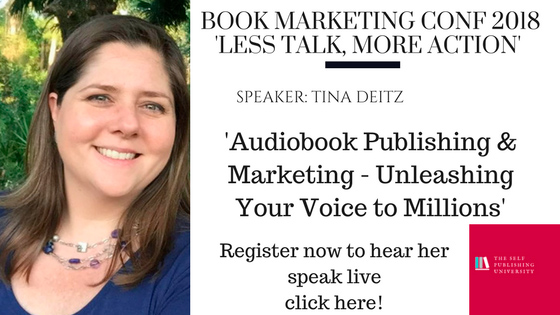
Self-Publishing University “Less Talk, More Action” Conference – Virtual – May 31

StartSomething Creative Business Solutions - Nonfiction Writers - Tina Dietz

A one day online conference focused on book marketing and increasing sales!

This conference offers 10 international Speakers ready to pour into you the help you need and have been searching for around the vital topic of Book Marketing!

The aim of this conference is to bring authors, agents and publishers in one place to have a hearty, healthy and value added discussion on the issues facing authors today and how they can better prepare themselves for success in the near future. Straight to the point, no sales, no fluff and taking action is the order of the day.

CLICK HERE for the event website and more information.

Book Expo America – New York City – May 31-June 1

StartSomething Creative Business Solutions - Nonfiction Writers - Tina Dietz

THE BIG KAHUNA! I have colleagues who attend and work this event every year, and they quite literally train for it because it’s so huge. Tons of events, tons of exhibits, the scope will blow your mind and give you ideas, info, and contacts for the entire next year to work with.CLICK HERE for the event website and more information.

**HINT: if you’re a blogger or show host with a show about publishing, books, etc. consider applying for a press pass for this show.Remember the pen IS truly mightier than the sword, and getting your creative juices flowing is key to getting your work and message out into the world. Is writing and publishing already part of your world, or are those areas emerging for you? What motivates you in this arena, or what stops you from publishing? Sound off in the comments!

Pin It on Pinterest