How to Capitalize on the Audiobook Renaissance with Tina Dietz
Audiobooks are the most rapidly growing segment of the publishing industry. Are you ready to capitalize on the audiobook renaissance?(Podcast on The Author’s Corner, February 25, 2021)
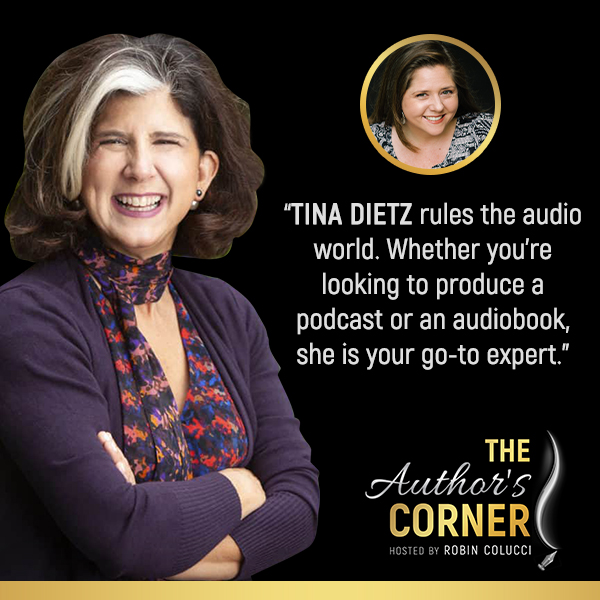
Audiobook sales are the most rapidly growing segment of the publishing industry. Registering double-digit revenue growth for the past few years, it is having a renaissance that can no longer be ignored. How can authors capitalize on this massive opportunity? Robin Colucci brings an expert on to the podcast to help us understand this booming industry. Tina Dietz is an award-winning and internationally acclaimed speaker, audiobook publisher, corporate podcast producer, and vocal leadership expert. Her company, Twin Flames Studios, helps authors and experts amplify their voices through audiobooks, podcasting, and other means. Listen to her discussion with Robin and learn why you should be looking into audiobooks as the new golden goose in publishing.
—
Watch the episode here:
Listen to the podcast here
Read to the transcript here:
The Renaissance of Audiobooks and How to Capitalize on It with Tina Dietz
Our topic is audiobooks. Audiobooks sales and consumption have been booming. This is the most rapidly growing segment of the publishing industry. It’s been on a growth surge for the last few years of double-digit revenue growth in the field of audiobooks. In 2019, we had another epic year of audiobook sales with 16% growth. The total sales in audiobooks were $1.2 billion. This is a phenomenal thing that’s occurring. I wanted to bring on an expert who could help us understand a little bit more about audiobooks, how authors should be thinking about audiobooks, and what we might be able to do as authors to capitalize on this massive opportunity. With that in mind, I have brought on Tina Dietz.
Tina is an award-winning and internationally acclaimed speaker, audiobook publisher, corporate podcast producer, and vocal leadership expert who has been featured in media outlets including ABC, Inc., The Huffington Post, and Forbes. Tina’s first podcast, the The Start Something Show was named by Inc. Magazine as one of the Top 35 Podcasts For Entrepreneurs. Tina’s company, Twin Flames Studios, amplifies the messages of experts globally to their target markets via audiobooks, podcasting, and leadership. Tina divides her time between the US and Costa Rica where she’s part of a leadership team building a conscious community called Vista Mundo. Without further ado, let’s welcome Tina.
—
Tina, welcome, and thank you for joining me.
It’s my absolute pleasure, Robin. Thanks for having me.
I’m excited to speak with you because even though I’ve been in the publishing world for many years and long before there was such a thing as audiobooks, it’s an area that I don’t know a whole lot about. I’m as excited for myself to learn as I am for our readers.
It’s an interesting world and industry. I’m happy to share.
Book marketing is an evergreen thing. A little bit every day is better than a big push once.
We all know what an audiobook is. A lot of us listen and have them. Audible is the most famous platform for an audiobook. Something I learned or at least got a taste of in our previous conversations is there are other platforms. I want to know a little bit about that because as I said, this is where you have “newbie Robin.”
Audible is the 500-pound gorilla in the room. They’d been around for a long time. Audiobooks have been around in one format or another. Since 1929 was the first audiobook, which was on an album. Audiobooks were on albums and then they were on tapes. A lot of us remember Books on Tape for years then moved to CDs and then, of course, it moved digitally. It was in the digital transition that happened that audiobooks have received a huge resurgence and a huge renaissance.
Prior to that, one of the first audiobooks I listened to as a young adult was Deepak Chopra’s Magical Mind, Magical Body. It was 12 or 16 tapes. I could not keep track of those damn tapes. I was always like, “What tape is next? I don’t remember which one I was listening to.” When digital audiobooks came about, it changed the game and much like the iPod Nano and the iPod in general changed music. Audiobooks changed in the same medium. Audiobooks, music, podcast, all of this audio content has had a tremendous rise in the last few years.
Audiobook Renaissance: Audiobooks are not as popular outside of the English-speaking world. However, they’re having a tremendous rise in countries like China and India.(Image via The Author’s Corner)
It’s such a drastic thing that in my mind, there weren’t audiobooks available. Luckily, I haven’t been in the publishing industry since 1929, so that’s a relief. It’s interesting because you’re right. As soon as you started saying it, I’m like, “the tapes!” It was clumsy. It was difficult to manage. You had to keep track of where you were. You could lose one and lose a whole chunk of the book, and you had to be home. You had to be somewhere where you could also use the equipment.
If you didn’t have a car and Walkmans, things like that, that’s where things got more popular in that era. Prior to that, with albums, you couldn’t do that. I remember being a little kid sitting in front of my record player, having the book, and record from Disney. When Tinkerbell rings her little bell, it’s time to turn the page. I loved those when I was growing up. Those were fun. It was part of learning how to read. Audiobooks have this lovely, rich tradition, but because we live in such a different era now with the internet, digital, Bluetooth, and all the technology we have, as you said, the dots don’t necessarily get connected between the two.
Audible, in that pivot, does hold more than 60% of the market share in audiobooks worldwide. Audiobooks are not as popular in other places of the world outside of the English-speaking Western cultures. However, they’re having a tremendous rise in countries like China and India as the markets have opened up. I’m waiting with a bowl of popcorn. I’m excited to see what’s going to happen there. Going back to your original question, there are a lot more outlets than that.
There are more than 40 other audiobook outlets. This goes everywhere from your libraries. Most people get audiobooks out of their libraries. Those are usually using apps like OverDrive and Libby and sometimes Hoopla. Those are the three big ones for libraries. Those are the apps that they go through. There’s also Audiobooks.com, Downpour, Scribd. Blackstone has their own thing. You can purchase audiobooks through NOOK and other places as well. There’s a large distribution world for audiobooks out there.
I’m curious when a library purchases an audiobook, do they purchase a license or do they purchase a single audiobook like they put a book on the shelf?
The world of libraries does work differently than the retail world and it’s not an area that I have a tremendous depth of expertise. I’ll be transparent about that. To get on the radar of libraries is a lot more challenging. It depends on the types of titles that they’re looking for and their yearly budget mandate. Every community is different. As you can imagine, the number of libraries across the US alone is huge. It’s in the tens of thousands.
Getting into libraries can be an entire strategy in and of itself. The way to get on the radar of libraries is a little opaque because you can’t campaign libraries. You could but it’s a little different. The licensing works different for libraries. They have to purchase more than one license in order to be able to pass it around, so to speak. There are some people in the industry who specialize in selling books to libraries. The audiobook and the book process for purchasing to libraries is, from what I understand, quite similar.
Make a note to get me that contact. That could be also an interest.
It’s a great niche.
I did a little research for a client. They were writing a book that was more for school-age kids. There are over 46,000 school libraries, nevermind other libraries. In K-12, there were over 46,000 libraries in the US at that time. There are all these different platforms but Audible has the lion’s share. I’m curious when you’re working with a client on an audiobook, since we jumped in distribution, what is your goal when someone comes to you for help with an audiobook? Do you focus on Audible or do you try to get them any? How do you look at all these platforms that are available as part of your strategy?
We have to look at the overall goals of the author. We work with non-fiction authors. Fiction goals and non-fiction goals are very different worlds. Generally, the goals with the fiction author is to sell copies. That’s the only name of the game. Whereas a nonfiction author has their book. It’s being used in service of building their platform. Selling copies is important but if you’re selling bulk copies of your book, you’re more likely to sell them in bulk when you’re speaking or to be handed out as a promotional item as a loss leader, or various other things.
Getting speaking gigs, attracting clients, getting press, media attention, all of those things. The goals are different so the strategies are different. What binds the two together is, first of all, distribution platforms. Secondly, everybody does want to sell copies and wants visibility. The third thing is that book marketing, it’s you and I could agree, is an evergreen thing. A little bit every day is better than a big push once. That’s where authors get tired. We could have a whole conversation about that.
As you said, with the non-fiction authors especially, I always tell my clients, “Look at what activities you already are doing to grow your business or you know you should be doing and do those to promote your book because it will pay you off way bigger.” It keeps the book in the conversation that way too.
Going back to your question about what we focus on: We have to look at the goals and the overall strategy of the company or the individual first. What do you want your audiobook to do for you? What do you already have in place? Do you have a marketing team? Do you already have strategies for your book? How is this going to dovetail with all of that? Usually, in terms of distribution, what we end up recommending for the most part, particularly for a newer book. If you have a book coming out as a launch and the audiobook is coming out right around the same time as your book is launching or say within six months afterwards, then what ends up happening is they’ll be distributed exclusively through Audible, Amazon, and Apple Books for the first year, which takes advantage of a couple of things. One is a higher royalty rate. Royalty rates for exclusive distribution of 40% versus 25% for non-exclusive distribution. The other thing it takes advantage of is being able to focus on pushing your marketing, your customers, and your audience at one platform.
Amazon, Audible and Apple Books, that’s one?
Technically, that’s considered exclusive distribution because Audible and Amazon are the same company and Apple Books has an agreement with Audible for distribution. It’s an automatic also-run thing.
I’m going to guess Apple Books is the second biggest platform. Would that be accurate?
No, because Apple only holds 10% of the cell phone market. It seems like it’s everywhere but on a worldwide basis, Android is a much bigger player in terms of the cell phone markets. Apple is amazing in their marketing and they’re amazing at creating evangelists for their brand.
Audiobook Renaissance: The most important factor in someone deciding to purchase an audiobook is the quality of the narration. (Image via The Author’s Corner)
This exclusive distribution, you said for the first year.
Yes. You then can evaluate after the first year and decide if you want to continue on or if you want to go with non-exclusive and then get the audiobook out to a bunch of more platforms.
What would be a good reason to be on? I’m wondering, if you’re getting 40% royalty and then it goes down to 25% royalty, does it ever add up like getting that extra market share offsets the decrease in the royalties?
It comes down again to marketing and the goals. If you don’t market, it’s not going to make any difference either way what it comes down to. It’s a marketing opportunity to change your distribution. Once you have your book on other platforms, you can make announcements about it like, “The audiobook is now available here. Did you know that this existed?” Much of marketing in our digital age, particularly on the 24-hour news cycle that is social media is coming up with interesting little, “Did you know,” pieces of information. It’s much like being nominated for a book award, getting a book award, having your book in a new place, or having a speaking opportunity. These are all little snippets of information to offer to your audience to stay top of mind. Additional distribution creates an additional opportunity for content to market your book.
What I’m getting out of this is that you’re adding these other distribution platforms, piecemeal, not all at once.
You submit it all at once but they tend to come in onesie-twosie in their approval process because you’re using a portal. The portals that we use and these are a self-serve portal. Not just for publishers but for people who want to self-publish as well. ACX.com is the common self-publishing backend for audiobooks for Audible. FindawayVoices.com can be also used for Audible but it will also help to get your book up to 40 additional platforms. Not everybody is going to take your book but a lot of them will.
What should I have asked you about the distribution that I didn’t?
That’s a lot of the broad strokes of that particular thing. The only thing about distribution that people need to know is that at least in the beginning, it’s something you want to stay on top of and go in. Read your monthly reports, get familiar with the notations that are made because that’s market research for you. What channels are working for you? What is not working for you? What are your best places to define readers? Certain distribution channels also, individually, if you look into them, may have more opportunities for you to promote your book in different ways.
Some paid opportunities usually come up. For example, Findaway and there’s this program called CHIRP, it sends out a daily email for audiobook deals. You can submit your audiobook to CHIRP once it’s been accepted through these other channels. Your book gets pushed out on a daily email to over 100,000 people. Now, you’re going to give them a deep discount on the audiobook as a result. If you’re talking about nonfiction and building an audience, building notoriety, all of that, that can be to your advantage.
I want to talk a little bit about audiobook production because one thing that we see is there seems to be two tracks. We either have the author themselves read the book or there’s a voiceover artist.
That is correct. Occasionally, that’s a hybrid of the two. That’s our third option.
Talk to me a little bit about what are the things like if an author comes to you and they’re like, “I’m not sure if I should read it myself or if I should hire a voiceover artist.” What are some of the things that an author should be thinking about when you’re looking for it?
One of the things the author should be thinking about, again, comes back to the purpose of the book. First of all, most authors who write non-fiction who are building a platform will come to me and say, “I have to narrate my book. Nobody can do it like me.” That is the first assumption that we question because that may be true. However, the most important factor in someone deciding to purchase an audiobook is the quality of the narration. Even if the author can read the book out loud in a way that they feel characterizes the book correctly, whether that translates or not to a listener receiving it the way it’s intended is an entirely different matter. They may feel like, “This is how I need it to be read,” but their listener may be going, “That is not what you’re portraying.” That is one of the things we have to take a look at and evaluate.
A lot of the folks we work with, our speakers narrating an audiobook is different than public speaking. It’s a tool. It’s a different animal. When you’re up on a stage, public speaking, you’re speaking one to many whereas on a podcast or a narration, you’re speaking one-to-one. You can’t get out there and be like, “Ladies and gentlemen, we’re going to be doing all of this and talk about audiobooks.” It blows your face off. You also can’t be boring but you have to slow down with an audiobook because audiobooks are at a slower pace than most other kinds of speaking. There’s a balance there. The breathing is different.
Recording an audiobook takes time and that’s if you hire a professional. If you want to go DIY, double that time and add a bottle of vodka.
Even the duration of time that you have to spend recording an audiobook—it’s not just a matter of reading the book. It’s reading the book in such a way that it sounds like you’re not reading it. There are all of these factors that go into it. In the early days of developing the company and the services and all of that, we did experiment with a number of different ways of working with authors who wanted to narrate their own books because it is an important thing. About 1/3 of our authors self-narrate and about 2/3 work with a professional narrator. That’s the way it shakes out. Some because they don’t have a great voice for narration.
They’re great for a keynote, but if you had to listen to them for 6 or 7 hours, no. Again, a different animal. There may be some physical issues. One of my favorite authors, brilliant book, brilliant man, and a rare form of head-neck cancer. He couldn’t narrate his entire book. There was no way. We did what I like to call the Tony Robbins Sandwich with his book. Tony Robbins narrates the first chapters and the last chapter of his book and has a professional narrator do the middle. That’s what we did with that particular client. It worked out well. Those are some of the factors.
Audiobook Renaissance: There need to be more opportunities for a diversity of narrators. One of the reasons people didn’t listen to audiobooks more is because they were boring. (Image via The Author’s Corner)
There’s something in here because when you were talking about a speaker on stage being one-to-many, an audiobook is a one-on-one. I want to point out an idea that goes along with that. It’s something that I speak about fairly regularly is this idea of how a book is the best way when you’re thinking about a marketing avenue to create intimacy to your prospective client or with your reader when we’re talking non-fiction. It’s often your prospective clients or somebody who’s going to be influenced by you in some way. What you’re saying about audiobooks and even the tone of the voice, the pace of the speech, volume, and everything else, I never thought of it before but you’re right. It is a one-on-one conversation, just like the writing is but it’s important to get that across. It’s even different if you’re standing at a book signing in front of the room and reading an excerpt.
You have more bodies there and different energy.
That is one-to-many, but an audiobook is a one-on-one conversation. One of the things is vocal quality. Even the amount of time the author is willing or able to—
The time is a big factor. I’ll give you simple math, 10,000 words of a book are about one hour of audio. You’ve got 40,000-word book, you’ve got about a four-hour audiobook. That four hours of the audiobook is going to take about 10 to 12 hours of recording time. This is working with a professional organization like us. This is not DIY. For DIY, double that and add a bottle of vodka. It’s not just me saying this and do a shot for every hour of audiobook you do, it’s a drinking game. Split up into 2 to 3-hour chunks because that’s about as far as you can go with our vocal fatigue and energy issues and all of that.
What we do to work with the author and take the technology out of their hands and also to give them the objective feedback and a person to play off of, is we do the full direction of our audiobooks, but we do it remotely. We have software we’re able to remote in to wherever the author is anywhere in the world, help them make sure that their sound is tuned correctly, we’ll suggest a microphone, make sure they’re in the right place in their home or office to record. We then fully direct and record the audiobook for them to the entire process. That creates a wonderful product. It also takes a lot of the stress and pressure off of the author. All they have to do is focus on delivering their message and being natural about it and that helps a lot.
You’re able to give them feedback.
Yes, so it makes it a lot easier to catch issues. A lot of our authors have charts, graphs, and exercises in their books. There are industry standards on how to narrate those. We’re able to live coach people through all that process as well.
Let’s talk a little bit about the other side of hiring vocal artists to record your audiobook. What are some of the things that you advise authors to consider when they’re trying to make that decision? Let’s say they’ve decided, “I’d like to use the voiceover artists.” What are some of the things that they should be thinking about as they’re deciding? What’s that going to look like?
I have done professional narration. My background’s as a therapist. As an entrepreneur of multiple businesses, did business coaching for years, but the voice acting was a paid hobby for me because I love a stage and a microphone. The masterclasses I took on audiobook narration had me have this epiphany about all my colleagues and clients who are doing bestseller campaigns, why aren’t they doing audiobooks? That was the rabbit hole I went down. That’s how I got there.
Between the podcasting and the audiobooks, microphones are a big part of my day one way or another. Narration and voiceover work in its industry. It has its own language and standards. Coming into that world as an author or as a business owner, there are some things you need to know about that industry. When we send out auditions, there are key pieces of information you need to provide to an author in terms of, what are you paying? What section of the book do you choose for an audition and how long it is? Where do you choose from the book?
Other key pieces of information that the narrator is going to need. If you want somebody to emulate your energy and have similar qualities to your voice being able to articulate, what are those qualities that are most important? What are the key pieces that somebody needs to know if the book is going to, first of all, resonate with them and what they need to deliver to you in terms of an audition? A lot of mistakes that authors make doing this on their own are putting an audition piece out that’s way too long and then being offended when somebody only sends back one minute of an audition. Auditions need to be short. Another thing that happens a lot is getting into the production of the audiobook and not having been clear upfront about the number of characters or the type of characters, even in non-fiction.
A lot of the pronunciation issues can come in regionalisms. We had an issue a while back. We keep a running list of these and this one we hadn’t run into yet. We had 38 replacements. You can’t go back when in audio like you can in text and do a find and replace. This narrator had to go back and we worked with the other because normally, we wouldn’t even allow that change at the end. That’s something that needs to be discussed upfront. Fortunately, the narrator was game and it all worked out but she would have had to replace entire paragraphs or entire sentences depending on the situation in the book. These are the things we get ahead of and get on top of. Occasionally, things happen as I mentioned. We get ahead of it 99% more than working through it on your own. Those are a few things.
What is the question that an author asks themselves even going into that? How do they know to tell somebody that they want that? It made me think of The Chicago Manual of Style which we both know is the publishing industry bible for punctuation and everything. It’s a perfect book except you have to know there might be a mistake to look for the correct way. How do you help authors figure out what to ask for in even a situation like that?
We have a whole onboarding process where we go through things like that. We have protocols, guidelines, and all of these things that we walk people and authors through to help prevent things like this. Everything from names to medical terminology and other types of regionalisms even down to looking at, “Are there any characters in your book, even if it’s nonfiction, who are they? What do they sound like?” One of my favorite books we ever did so far is called Tiger Bravo’s War. It is a ten-hour audiobook about the Vietnam War that I would put up against Ken Burns any day of the week.
Our narrator who works with us in the company now on our podcasting divisions. He’s a wonderful guy named David White. He did an incredible job of nuancing about 15 or 20 different soldiers’ voices inside of this documentary-style memoir. Getting those characters out front, getting a sense of who they are, and having the narrator demonstrate that before you get too deep into the production, that’s important.
I want to bring up something because you cleared a memory for me of an audiobook that I was listening to and I was enjoying. I believe the author Red Moskoff. They did a character and they brought in a different voice. By the way, this was traditionally published—New York Times. Not only was it a terrible Middle Eastern accent, it was so bad that it sounded racist to me. It’s offensively bad.
They went full Apu from the Simpsons.
That’s a perfect analogy. I was going to say it was like a Breakfast at Tiffany’s nightmare. I still enjoyed the book but every time that would happen, unfortunately, it was more than once in the manuscript. I would cringe and it nearly ruined the experience for me. What about characterization, especially when it’s clearly across cultural narrations? This seems to me to be a real potential minefield. If you could you say a little bit about that.
There is always something to get better at.
It can be. We produced a book that was author narrated and it was an emotional book. As I’m talking with potential clients and scanning through their books, a lot of them are highly emotional. I was crying in the first two pages of this guy’s book. He was writing it and he was an angry, abusive man. It was about his healing journey and what he wanted men to know. He had traveled to many countries as a professional Rugby player. He had voices of these people from different countries and cultures. He had a lot of facility in doing this.
He was able to slip into their skins—which most authors don’t have that ability to do. One of the things that the director did is he went and listened to other authentic accents to see how far off or how far on the author was and to make sure it didn’t come off as mocking or disrespectful in any way. There are ways to handle it in the direction process. Professional narrators are sensitive to this because they want things to be represented accurately. That comes down to the audition process and vetting people.
I didn’t feel like we needed the accent in that book I’m telling you.
A lot of times it’s not necessary or there’s a shade. You don’t have to hit it hard.
Why is this even happening?
It happens a lot with male narrators doing female voices as well. Some are brilliant at it. Some of them will characterize female voices as whiny, shrewish, or childish. That’s an issue in the industry that gets brought up regularly and on both sides. Women doing male voices, men doing women’s voices because it’s one narrator. Full cast recordings are still quite rare in the industry because of the cost of production. Some of them are great, like The Graveyard Book by Neil Gaiman, but particularly in non-fiction full-cast recording.
I’m glad we got a chance to talk about that. It left quite an impression on me.
If we have culturally diverse authors and one of our authors is from China. We opted not to have him do the narration. His articulation isn’t quite up to speed. It might be hard for the listener. He’s a brilliant speaker from the stage—he’s fantastic. But 8 to 10 hours on an audiobook will be harder. One of our biggest challenges has been finding somebody who is Chinese-American or Chinese immigrated to the US, a professional narrator who can do this voice authentically.
Have a hint of the authentic accent without being thick.
It needs to be real.
That’s another aspect of this. If the author is an immigrant or something in the US.
We have several books in the pipeline that we know our narrator searches expanded because there need to be more opportunities for a diversity of narrators. For years, it was, “This is Audible. I’m an Audible guy.” That’s one of the reasons people didn’t listen to audiobooks because they were boring.
“I’m a suburban white man Audible.”
“Can you see my blue suit just from the tone of my voice? I bet you can.”
“On weekends, I wear khakis.”
“I play golf.” I’m a professional instigator, I should warn you.
What I wanted to say is this sounds like a heck of an opportunity. Let’s talk a little bit about investment-wise. What’s the difference when we hire an artist to record our audiobook for us versus doing it ourselves?
There are a couple of levels. We try to keep the cost of author narration and the cost of professional narration very similar. The business model we’ve created has allowed for that because counterintuitively to a lot of people, it used to be in our company that author narration was way more expensive. I run into that all the time but think about it. We had to train the author on a whole new skillset. We had to research studios. We had to pay studio time, which is hourly, and studio time, depending on where you are in the world, is anywhere from $50 to $250 an hour. The editing was a lot more intensive because we weren’t doing what’s called Punch and Roll recording. We weren’t doing live direction. Studios will give you a sound engineer who’ll tell you if you’re screwing up but they just record the whole session. We stop, back up, and record again to get rid of a lot of those errors.
The comfort level of the author was tense because even with training them ahead of time, it was crazy. All of those factors make for a much more expensive prospect. We’ve got things down and we have a negotiated rate with our narrators that we’ve got a sweet spot. However, we do also have a premium level for narrators. These are folks who are in the Actor’s Union, SAG-AFTRA. The minimum required hourly rate to work with those folks is $225 an hour. That’s what’s called a per finished hour rate. That can include multiple things. That’s not studio hours. I go back to that 40,000-word book is four hours long. It would be $225 for four hours. That’s the math we’re talking about here. We’re not talking about 15, 20 hours in a studio at $225 an hour.
Audiobook Renaissance: It’s always better to experiment, beta test, and interest focus group things out before making a big launch. (Image via The Author’s Corner)
That’s a lot more reasonable than I would have been imagining.
The average audiobook that we produce is somewhere in the $2,800 to $5,000 range.
I’ve heard of people charging 2 to 4 times.
It can get high depending on how much margin they’re adding. If you’re working out of New York or LA, your price automatically goes up because the cost of production is much higher in those cities.
If you’re hiring the talent or as you said, you were able to do it remotely, that’s not as expensive.
All the companies I’ve ever owned, except for my first one, was in completely remote. For years, we’ve been 100%t remote and my team is across North America and Europe.
A lot of businesses like mine are similar. We were already working remotely. The pandemic added my social life to the remote category.
I lost all my coffee offices for a while. I know that talk about first world problems, but nonetheless.
This has been informative. We talked about production, distribution, costs, and talent. The thing that’s occurring to me now is, you don’t have to reveal any names or anything. Do you have any stories of audiobooks either gone extremely well or horribly wrong? I always love a good story.
One of the reasons we changed the way we were doing things and I looked for solutions around author narration is because of both the amount of time that it took to work with authors that way and then having to go to the studio and the cost involved. Like with many things in business, a lot of what has to be handled upfront is expectation management. For people who don’t understand what it takes to edit audio and rerecord audio versus text, we call it a repeated education process and 90% of people get it. We occasionally do end up with someone who resists the training and coaching, and then after recording wants to go back and rerecord the whole thing because “now they have a handle on it” and think that’s included.
That is not the way that works. You can’t go back and do another ten hours of recording because you feel like it. You haven’t taken the coaching and been willing to do the work that needs to be done. Similarly, managing expectations on the professionally narrated side of things, it’s important upfront to get all of the expectations, voices, cadence, timing, pacing, and all these things are done. We do all that in what’s called the first fifteen of the book. We take about the first 15, 20 minutes, produce it, and make sure that it’s what the author wants before we produce the rest of the book.
We have an audiobook that created a tremendous amount of havoc in the author’s life because they realized in listening back to their own work, that they hated their work and wanted to shutter their company. It was intense. In hearing a third party deliver their work back to them, they had a breakdown. I’m a therapist by training but they were also in a different country, difficult to reach, and a long time difference. It ended up being an abandoned project with them not paying their bill because they decided to not move forward with their company. That resulted in some policy changes on our side of things.
Once you’ve been in business for a while, there are always a few items in the contract that were created in response to a specific situation.
That’s why contracts end up being so long.
They’re like, “We can’t let that happen again. Let’s set this.”
Making people’s initials in certain paragraphs is something we do because it’s easy like the terms and condition page to scroll to the bottom and check, “I have read it.” It is important to read. I don’t read all the terms and conditions either, but in contracts, I definitely read every word because there could be some questions there.
I’m thinking about that. They should have paid you but it could have been a great thing that happened for them.
That’s the thing and I don’t disagree. It was a case of somebody who was extremely well-meaning, had gone out, and they were putting themselves forward as an expert in an area that they had no experience in. It was all academic knowledge. It was all from synthesizing reading and going to workshops. They had never had a single client ever. They, unfortunately, spent over six figures in trying to launch this company. This is a lesson in entrepreneurship. I know there’s somebody out there who needs to know this. I’ve never told this story or alluded to this story anywhere in the media before. I built many businesses and companies my time and helped many other people do the same. It’s much better to experiment, beta test, and interest focus group things out before you do a big website, a book launch, or anything like that.
I want to add to that because this has shown up many times in my business that somebody will come to me in that situation. They’re like, “I want help writing a book.” I’ll be like, “Cool but I’m not going to be the one helping you.” You have no business writing a book about your expertise until you’ve developed some expertise. Unfortunately, there are a lot of people out there who will tell people, “You need a book so you can have a business.” It isn’t true. It’s such a dramatic illustration of a big problem but this is investing over six figures to launch a brand with nothing behind it. By the time he came to you, most of that money was spent.
It doesn’t matter what religion you are. When it comes to sales, you have to become a Buddhist at that moment.
This is an aftereffect of it.
I will let people write a booklet. Quick turnaround, test, and we do help people with that. That’s why I came up with that idea, by the way, was because I turned away thousands of people over the last years who came to me wanting to write a book in exactly that situation and said, “Go become an expert and then come back.”
Come back when you have some chops in what you’re doing. That happens more on the podcasting side of our company. I will pivot people from, “I need to start a podcast.” “No, you don’t need to start a podcast. You need to build some clientele, sell some stuff, and be in business.” I’ll pivot them from having their own podcast to podcast guesting. That’s a great way both to network, to generate content, to build authority, all of those things that you want to do without the massive commitment that it is to have a quality podcast.
I know we’re a little off-topic, but I agree with you. There are people reading this who need to know this. When people start a podcast, what they need to do is get clients. When they decide to write a book, what they need to do is get clients or do an audiobook. The problem is if it feels productive. They can get up in the morning and say, “I’m growing my business,” “I’m recording a podcast,” or “I’m working on my book.” What they’re not seeing is what they’re avoiding. If people don’t have clients yet and everything’s theoretical, it’s because they don’t feel comfortable with doing sales.
A lot of what shows up looking like productivity is an expensive, very long avoidance strategy that could eat up somebody’s entire savings and set them back in terms of their ability to generate momentum in their business because they’re trying to avoid sales subconsciously. What’s they’re saying is, “This is what I do. This is how much it costs, Mastercard, American Express, or Visa.” That’s what innate and they can tell themselves they’re being productive. That’s why it’s so destructive when people tell people that. It’s a double whammy. When they figure it out, their resources are drained.
I bootstrapped my businesses in the beginning for years working other jobs, whatnot is exploring, and all of that. Sometimes you get sold the dream. I grew up in a situation, my parents owned a business, and I was surrounded by sales. Even I wasn’t comfortable with sales until I was in my late 20s, early 30s, it’s always something to learn. There’s always something to master or get better at. It never has anything to do with making the sale, it has everything to do with your internal conversation, your personal growth, and your ability to create relationships. The sales has nothing to do with sales.
We can do a whole episode on sales. I look at it that the sales conversation is a quest for clarity and to help the person that I’m on the phone will come to a place of clarity. If the clarity dictates that we work together, we work together. If the clarity dictates that we don’t work together, we don’t work together. That takes all of the pressure off everybody. I don’t feel pressure to make the sale and they don’t feel pressured too or people like they’re being sold because that’s not what the conversation is about.
This was a mentor of mine that created a lot of clarity for me around sales. Robin, how do you feel about cookies?
I love cookies.
If I were to bake a plate of cookies, I would say, “Robin, would you like a cookie?” Assuming we were together and not social distancing, you would say yes, right?
Yes.
If I were in a room, I walked around, and I offered 100 people a cookie, some people are going to say yes and some people are going to say no. The people who say no, is there anything wrong with my cookie?
Nothing is wrong with your cookie.
The people who say yes, is there anything magical about that cookie special or does it mean anything?
No.
There are all reasons they could have said no. They could be diabetic, not like that particular cookie, allergic to one of the ingredients, not hungry, or on a diet. The cookie has nothing to do with me. It has nothing to do with my worth or even with my ability as a baker. People say yes or no. Ultimately, you go out into the world and you think about “selling something.” You’re offering them your cookie, and there’s nothing wrong with your cookie.
That’s a great analogy. That was the hardest thing for me to get over because I went from a place of being afraid of sales to I’m almost addicted to sales. I love selling. It’s fun. The big thing that I had to get over was taking it personally either I was lacking or what’s wrong with me. That’s how I did. I was having a lot of conversations in a short period of time to the point where I didn’t care.
That happens a lot with people learning how to like their own voices. They have to listen to themselves over and over again. I say all the time, “It doesn’t matter what religion you are. When it comes to sales, you have to become a Buddhist at that moment. You just have to practice non-attachment.” Temporary conversion. You can convert back afterward.
You can pick up all your baggage. Tina, this has been wonderful and informative. Thank you for sharing your insight, wisdom, and great stories with us.
Thanks, Robin. This has been awesome. I appreciate it.
Important Links:
- Tina Dietz – LinkedIn
- The Start Something Show – Podcast
- Twin Flames Studios
- Vista Mundo
- Audible
- Books on Tape
- Magical Mind, Magical Body
- Hoopla
- OverDrive
- Libby
- Audiobooks.com
- Downpour
- Scribd
- Blackstone
- NOOK
- Amazon
- Apple Books
- ACX.com
- FindawayVoices.com
- CHIRP
- The Chicago Manual of Style
- Tiger Bravo’s War
- David White – LinkedIn
- The Graveyard Book
- SAG-AFTRA
About Tina Dietz
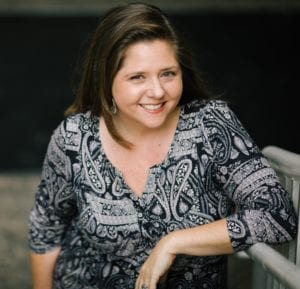
Tina Dietz is an award-winning and internationally acclaimed speaker, audiobook publisher, podcast producer, and influence marketing expert who has been featured on media outlets including ABC, Inc.com, Huffington Post and Forbes. Tina’s first podcast, The StartSomething Show, was named by INC magazine as one of the top 35 podcasts for entrepreneurs.
In 2016, Tina was the recipient of the Evolutionary Business Council MORE award and in 2017 she received the award for Outstanding Audio Company from The Winner’s Circle. She is also a member of the EBC leadership body and a founding member of the Forbes Coaches Council. Tina was also the lead interviewer in the podcasting documentary “The Messengers” and featured in the film.Tina splits her time between the US and Costa Rica where she’s part of the leadership team building a community of conscious leaders called Vista Mundo.
Love the show? Subscribe, rate, review, and share!
Join The Author’s Corner Community today: